Visit to Tuovilanlahti in 1908
13/11/2025
Kaapro Jääskeläinen, also known as August Bernhard Mäkelä, recounts
(Cheerful Stories III, 1908):
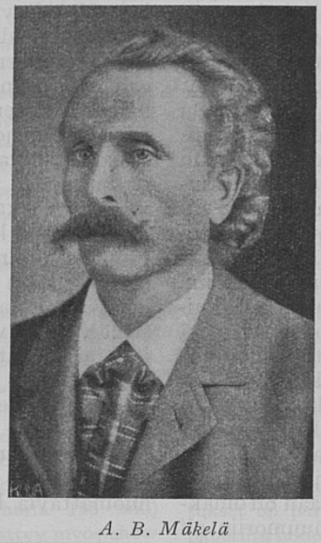
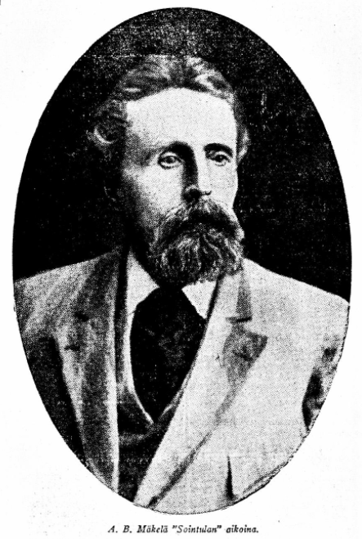
"It is best to go now, if you ever intend to visit there. And it is a place that must be visited. If only it were not already too late."
That advice was given one morning by a friend from Kuopio, Heikki, a member of the Travelers’ Association, well acquainted with local conditions and someone trusted blindly in matters such as setting out for Korkeallekoski. It was only a pity that Heikki himself said he did not have time to come along.
"We people of Kuopio have been there so many times," he added with a smile.
"And no guide is needed for that trip. You just get on the Tähti."
It was one of the first days of June, the air charged with thunderstorms, jagged clouds along every edge of the sky. But the sun was still shining, and shining “sweetly,” as Heikki said.
If there had been more time to stay in Kuopio, there would have been a chance to wait for more reliable travelling weather, but now there was no choice but to make do with this. At three o’clock it was time to go down to the harbour and look for the “Star,” like the three kings from the East. Back and forth along the edge of the quay, examining the departing steamers, each with its own escort. But there were only the “Modest,” the “Miss,” the “Beloved,” the “Quick”... aha, there the “Star” peeks out from behind another.
Yes, but just try getting there! There was water in between.
“You have to go around the bend of the pond,” someone was heard to say.
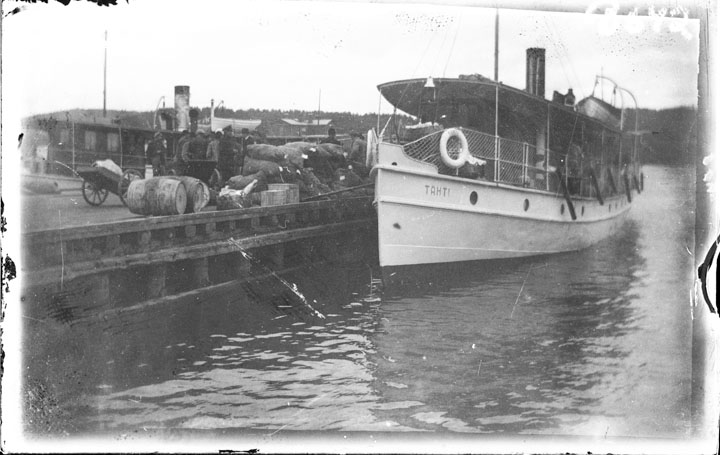
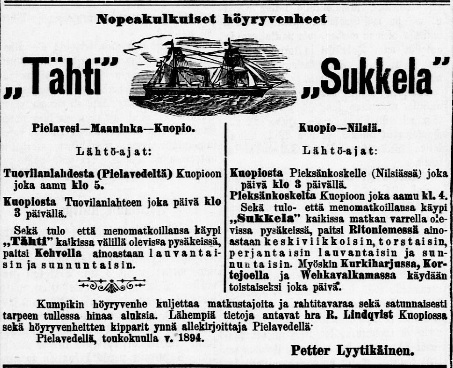
The clocks on the other ships were already striking three, as they began one after another to slip out onto the open water, but fortunately the "Star" stayed in place long enough for there to be time to round the “pond’s edge.” It is said that it always departs later than the others, so that it can then overtake them.
It is indeed a great honor for a ship, and it feels rather proud for the passenger as well. There went the “Swift,” left behind already, and now “Lempi” is falling back… no, it did not; it just managed in time to turn onto another route.

Maaninka -laiva Tuovilanlahdessa
Wheezing and puffing, it rounds Puijonniemi. Out on the water it feels rather cold. The lake has not yet had time to warm up, having only just shed its icy cover. The wind drives head-on across the wide open expanse.
It keeps growing stronger and stronger. The surface of the water is completely black, looking terribly angry. Thunder rumbles in the distance and the rain begins to lash down. But no one leaves the ship’s deck to go below to the saloon. They simply sit there faithfully and let the water pour down on their heads.
"If only they would come to give out the tickets!" sighs the person sitting next to me so earnestly that it aroused my curiosity. "What’s the hurry with that?" I asked. "One could get away from freezing here," came the reply.
On closer investigation I found out that the fare from Kuopio to Tuovilanlahti is 1 markka 25 penniä on deck, 2 markkaa in the forward saloon and 2 markkaa 50 penniä in the aft saloon – and that the place is determined by where the captain happens to meet each passenger when handing out the tickets. After receiving the ticket, one may freely stay wherever one wishes.
But this time the skipper was not in any hurry at all to collect the tickets. A really fierce rain shower seemed to be on its way, and he probably thought it would inevitably drive the passengers into the saloon. And he was not mistaken. Within a few minutes we were in the midst of a raging storm.
It rained and blew as if it were the end of the world. One by one, the deck passengers pressed into the saloon. And when there seemed to be as many people inside as possible, the skipper stepped in with his ticket box. Only the very bravest were still left on deck. Together with them, I was already rejoicing in having received bravery’s reward: 75 pennies of money saved.
However, our joy was premature, for the skipper was more cunning than us. After coming up from the saloon, he stopped collecting the fares and paid no attention at all to those of us on deck. He simply went calmly to turn the wheel. It seemed an important turn was about to be made.
It was clear that before the first stop he would have to take the money, and there was nothing to do but endure it like a man. But one stretch of open water had already passed after another, and one strait had followed the next, and still there was no sign of a stopping place. The cold dampness was seeping through to the bones and marrow. This 75‑penny struggle could not be endured much longer. Therefore the decision was made to slip into the saloon as quickly as possible while the skipper was busy with the turn. Perhaps it would then be bearable, once the reserves of warmth had been secretly replenished.
But I had barely had time to feel the salon’s warmth caressing my body, and my teeth had only just stopped chattering, when I saw in front of me the captain unwinding the ticket strip from his mysterious cone.
Perhaps he had left the ship in the middle of a turn or had ordered the deckhand to continue that manoeuvre.
Then, at the very last moment, one more spark of hope flashed through my mind.
"Are round-trip tickets sold?" I asked. "I’m only going to pop over to Korkeakoski and come back to Kuopio in the morning. Isn’t there a discount for that?"
"Is sir a pleasure traveler?"
"Yes – as long as the weather allows."
"For pleasure travelers the fare is only 2 marks 50 pennies for a round trip, in the saloon."
And there I had been standing on deck, shivering for nothing, suffering from the cold and perhaps ruining my health for life!
For the same fare it would have been possible to stay freely in the saloon. Very wisely, they do not publicly announce anything about their fares and discounts. In the newspapers there had only been the ships’ routes and departure times. But for everything else, “the captain on board will provide information.”
Now I felt good again. The warmth felt so sweet. “Warmth and bread” – those are the basic melodies of human life. The value of bread is remembered three times a day by everyone, but the importance of warmth tends to be forgotten, unless there are reminders like this from time to time.
I had the strength again to start waiting for a stopping place, if there was going to be one at all. Finally came Kehvo, where there was said to be an orphan school, and soon after that Hirvilahti with its elementary school. People here behind Kuopio were clearly striving for education.
When the shallow-built areas of Ruokovirta were then approached and the ship slipped through the beautiful canal of the same name, piers began to appear one after another.
A sturdy, sharp-tongued master from Pielavesi explained that the reason was that they had now reached the borders of the Maaninka parish, and that the inhabitants of Maaninka had fallen into such disputes over their communal affairs that at most three people could fit on the same pier; and although the piers were placed so densely, the most quarrelsome had to be ferried by boat from the pier to the ship, out into the middle of the open water. Such seemed to be the effect of local self-government on shipping there.
The surroundings might have been quite charming if the weather had been fine and it had been the height of summer. But now they still lacked the final touch: the trees were only just coming into leaf, the grass was patchy and withered, and even naturalists would hardly have found many flowers.
Thus it may well be quite true, as the esteemed guide from Pielavesi remarked about these landscapes, that “they are not as ugly as they look” – even though it sounded a little strange.
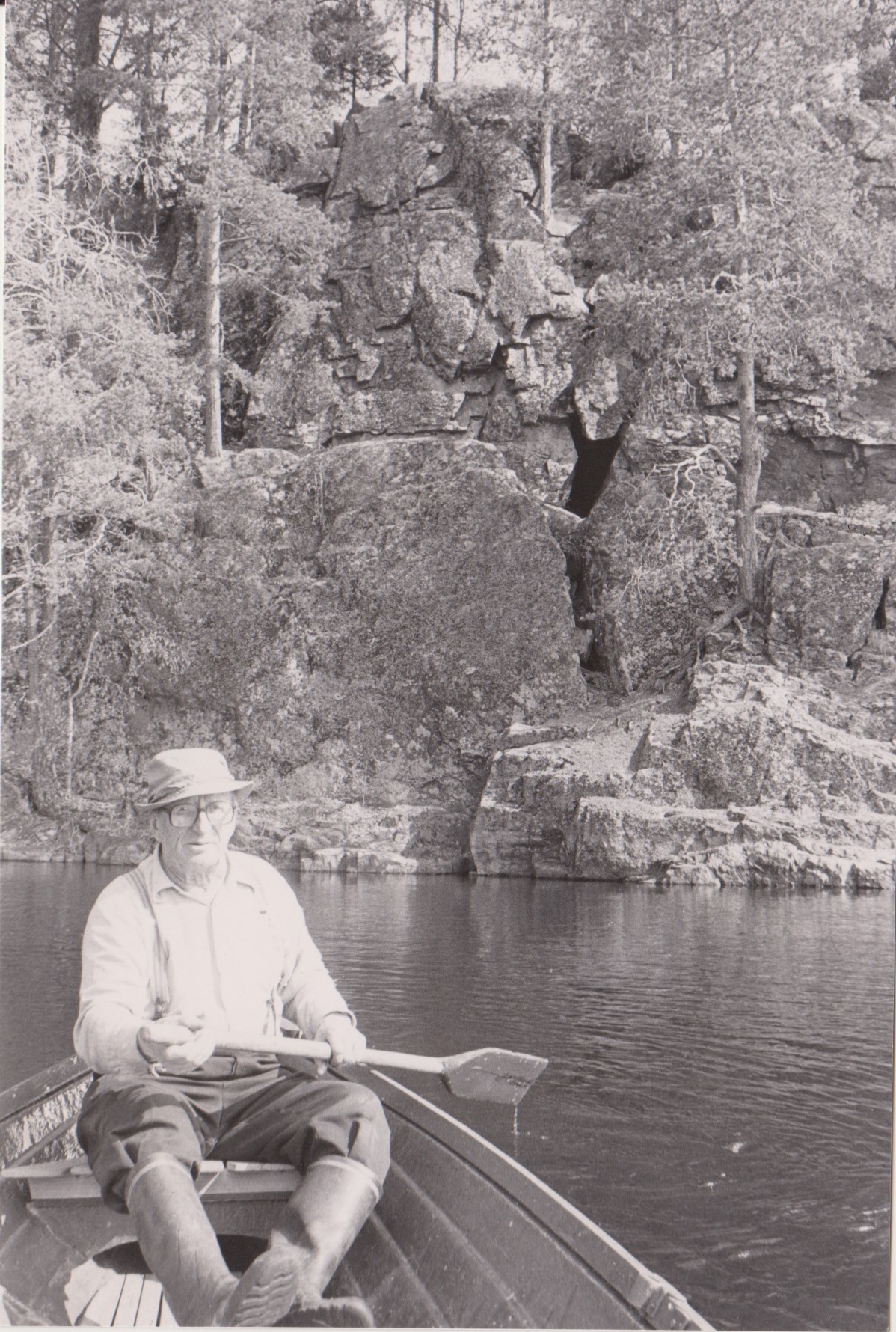
Ahkiolahti, or the Vianta Canal, was no longer used. The course was turned back right at the entrance, and the search for the mouth of Tuovilanlahti began. It would have been a wonder if it had not been found. It is so different from the other bays of Savo. It was neither smiling nor shimmering, neither fringed with grassy shores nor edged with leafy groves – yet neither was it overwhelmingly rugged, but rather a little of each.
Most of all, it resembles the beautiful bays of Lake Ladoga. Bare rock walls rise steeply from the water, but on their shoulders, near the houses, green meadows and fields of young grain flourish. The bay is quite long and narrow. When looking from the inner end toward the mouth, one sees landscapes which – whether called Rhenish or Alpine – are, in these homely surroundings, nothing short of majestic.
In the side of a certain cliff, a short distance above the waterline, there is a man-sized hole that is said to widen deeper inside the mountain into a spacious room. This place is called "The Devil's Nest." A man from Pielavesi, who was now within the borders of his own parish, asked the skipper to steer close to the mouth of the nest, to see whether the old fellow would latch onto our boat. But he did not. He was probably not at home, as he had not been seen for many years.
"Perhaps the priests have driven him away?" I suggested to the man from Pielavesi.
"Not the priests from this parish – he has had time to get used to them. I’m more inclined to suspect the new bishop of Kuopio – perhaps he has fled to another diocese to escape him."
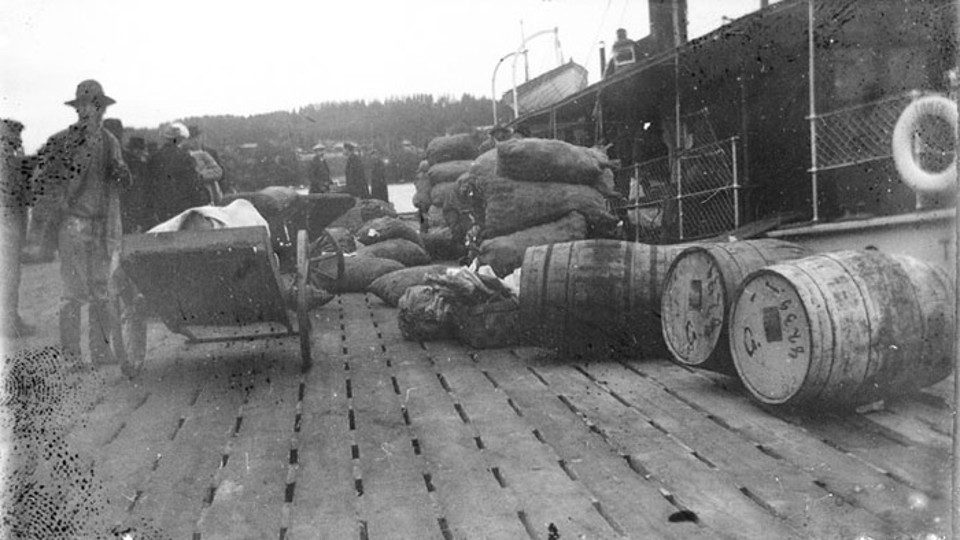
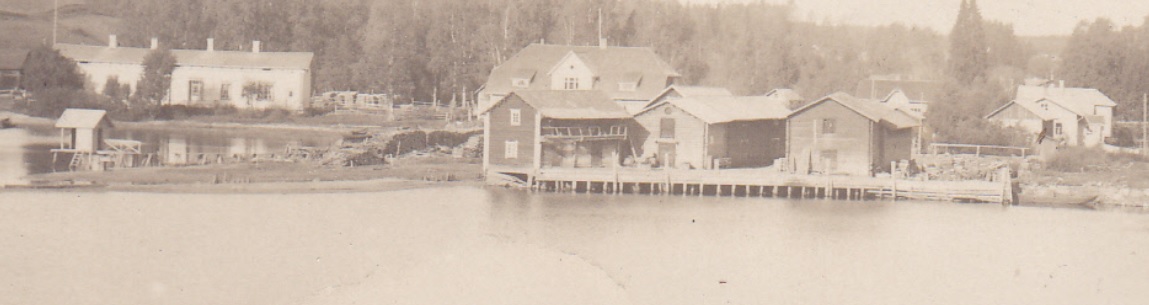
Tuovilanlahti is a thriving commercial hub. The shore is full of warehouses, barges and piles of barrels; in the village there are shops and dairies; in autumn the buying of butter is brisk. Aha, I thought, no wonder that in the midst of such activity an old mountain man cannot just lie idle in his lair. One has to keep moving to get anything done.
Upon reaching the shore, it was first necessary to obtain some material strength from the inn in order to continue the journey. For there were still about three kilometers to walk. And that strength was obtained, when one had to. In Savo, anything can be had “when one has to.”
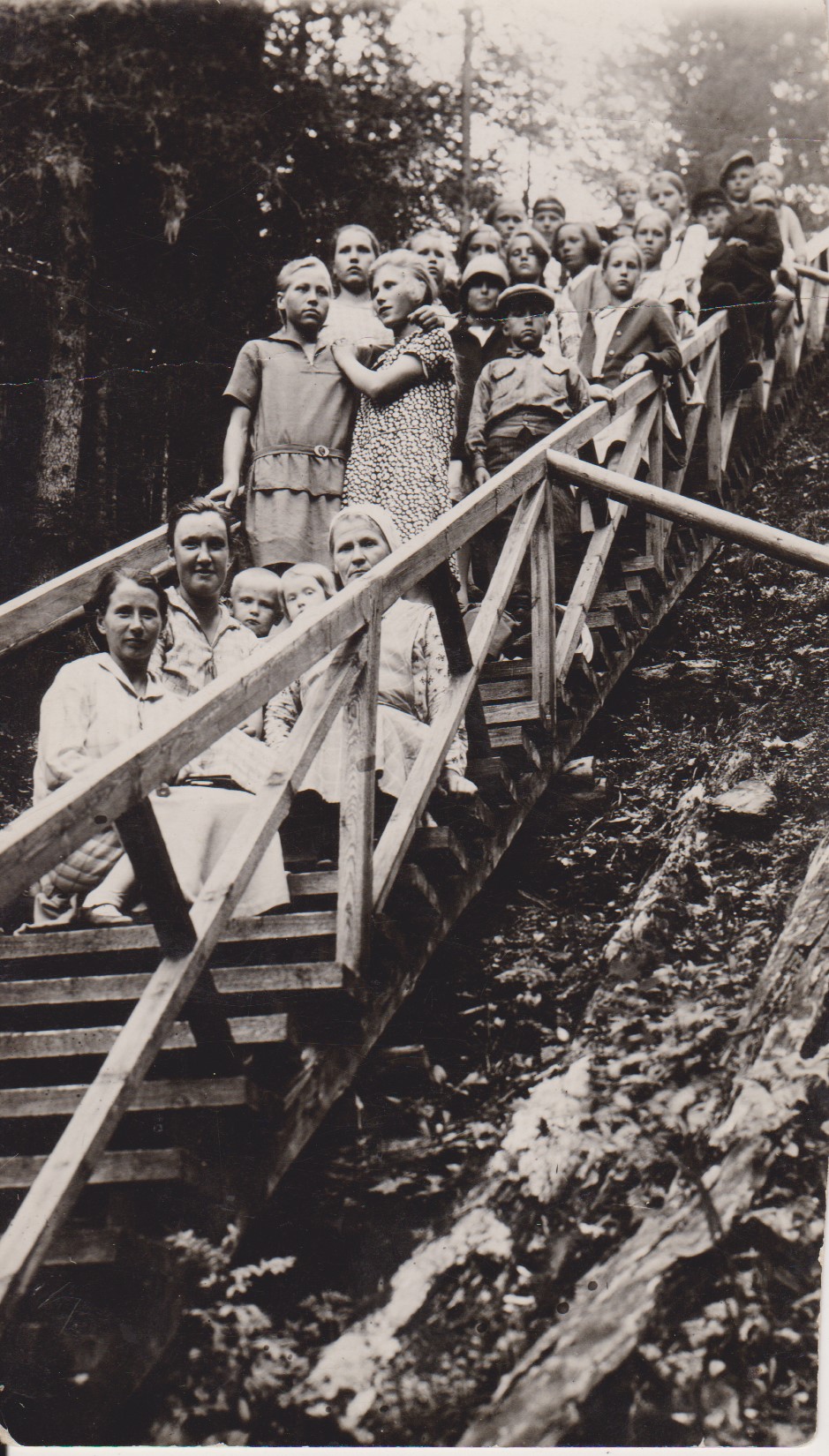
While eating, the innkeeper said that the Tourist Association had not yet even begun to build the comfortable steps it had planned below Korkeakoski. He, who boasted of being an enthusiastic friend of tourism – though possibly not without some material side motives – said that he had maintained steps there at his own expense for twenty years. But considering both the man’s age and the look in his eyes, it was impossible to believe the time had really been that long.
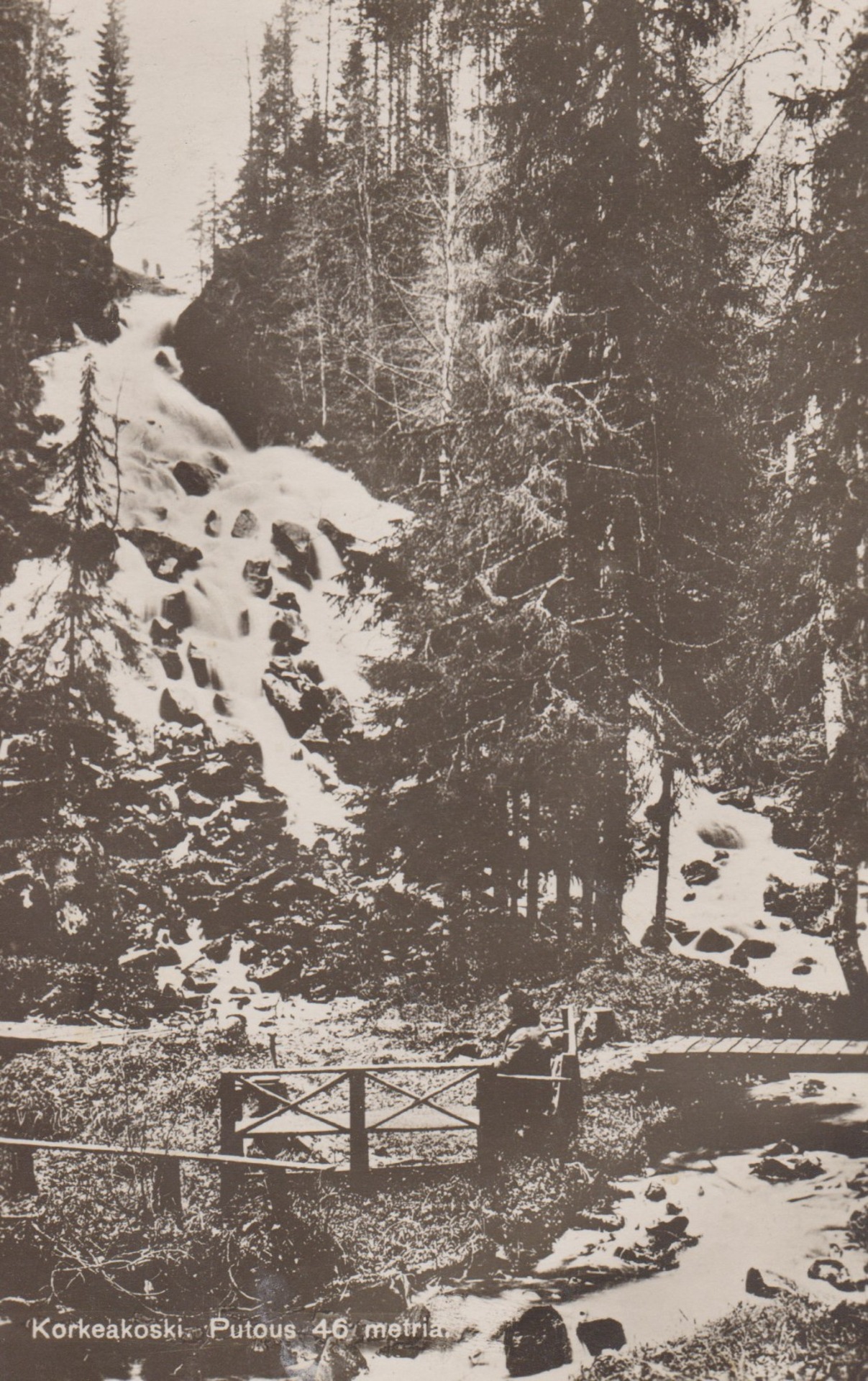
The lands here are hilly, and in the distance ever higher hills shimmer on the horizon. The river or stream or ditch – whatever one wishes to call it – in which Korkeakoski lies, runs for a long way along the bottom of a rather deep ravine with steep banks.
The roar of the rapids can, strictly speaking, be heard from just under a kilometre away, and close to it a faint conversation cannot be made out.
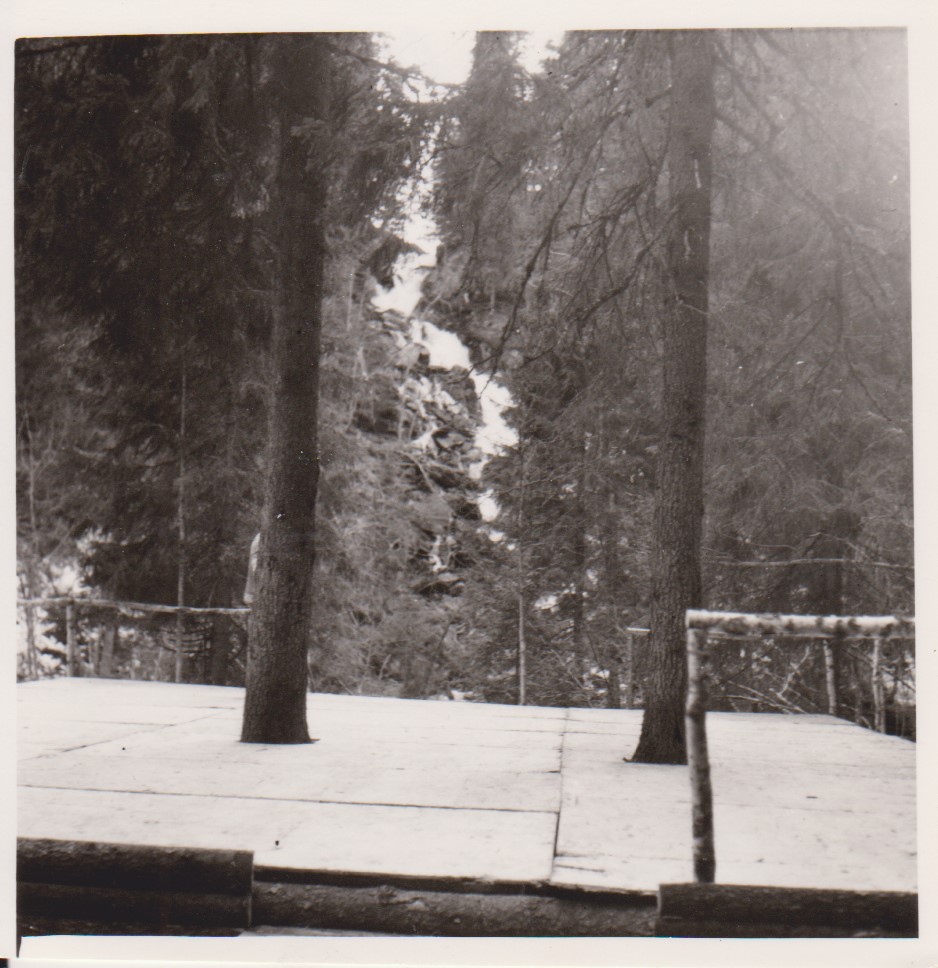
And now here it is, Korkeakoski. With great force the water plunges from the rocky ledge down the stony slope into the dark depths. Once upon a time it even broke a mill from its neck, for a couple of millstones and a cluster of wall logs jut out right in the very throat of the falls.
There is plenty of bustle: the water a white foam, and a fine mist rising upward toward the heights. Steps lead down beside the rapids, and with every step there is the hope that the Tourist Association has already carried out its intention of building better stairs. The heavy man from Pielavesi hoped for this especially, for he said he feared death, being on bad terms with the clergy because of the election of the municipal chief.