The Pesonen Family
11/12/2025
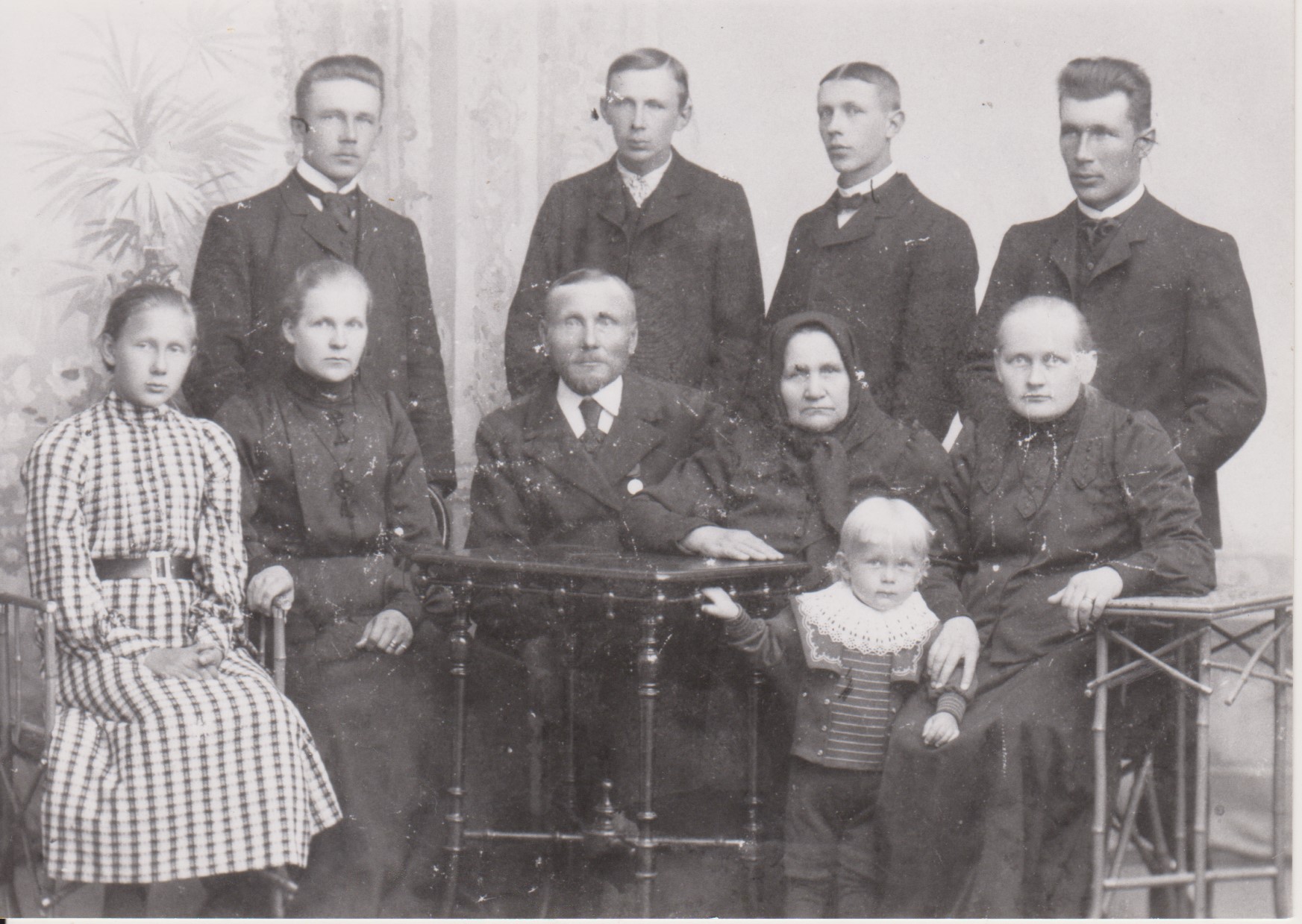
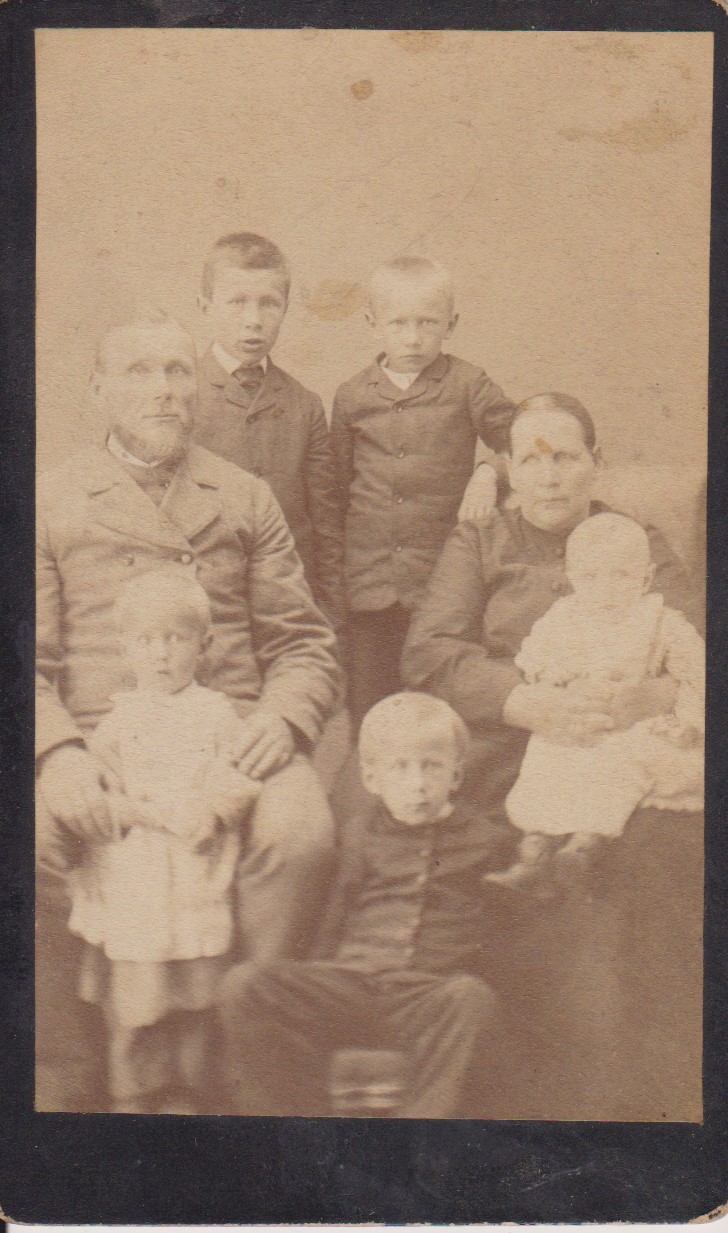
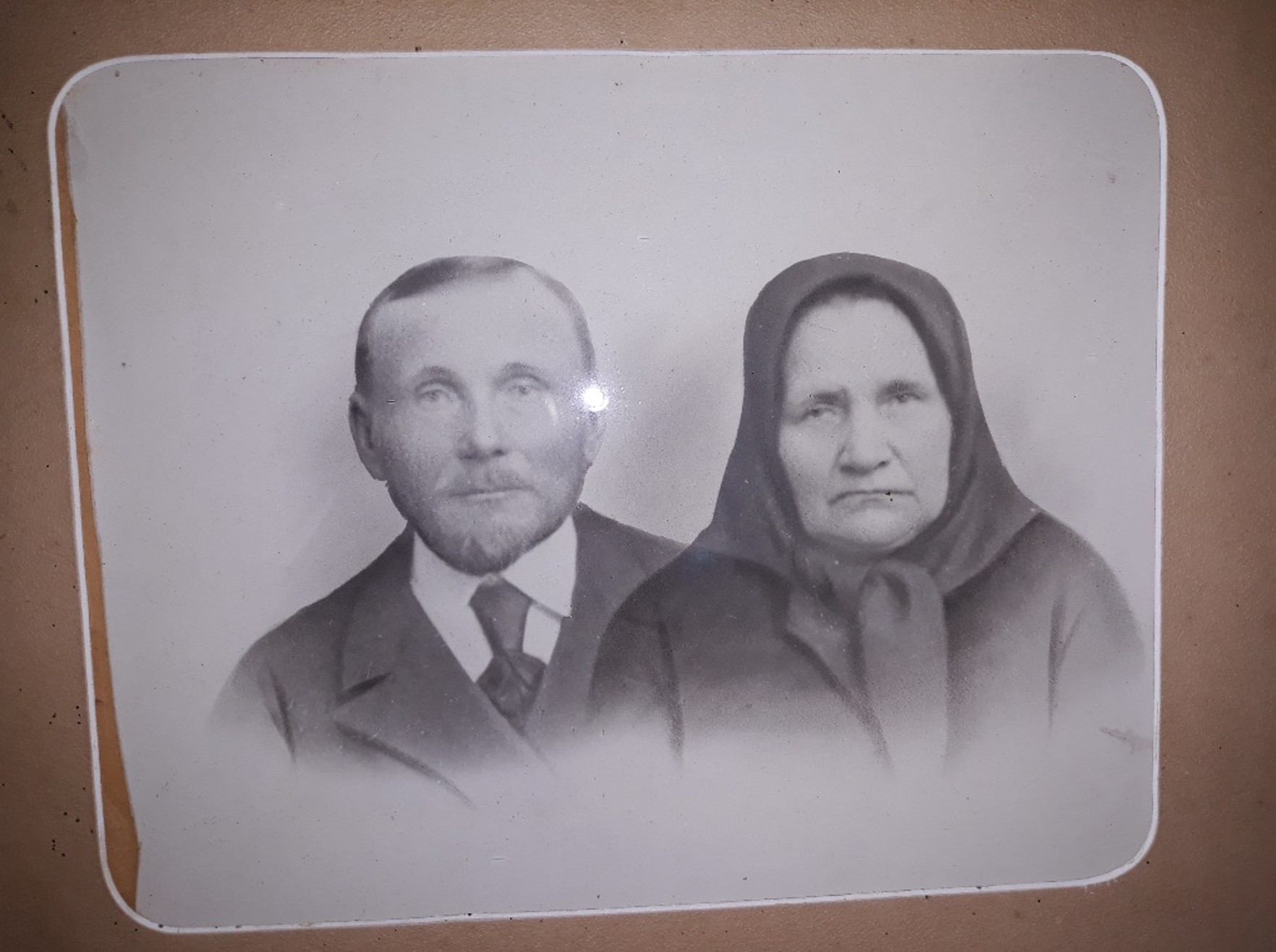
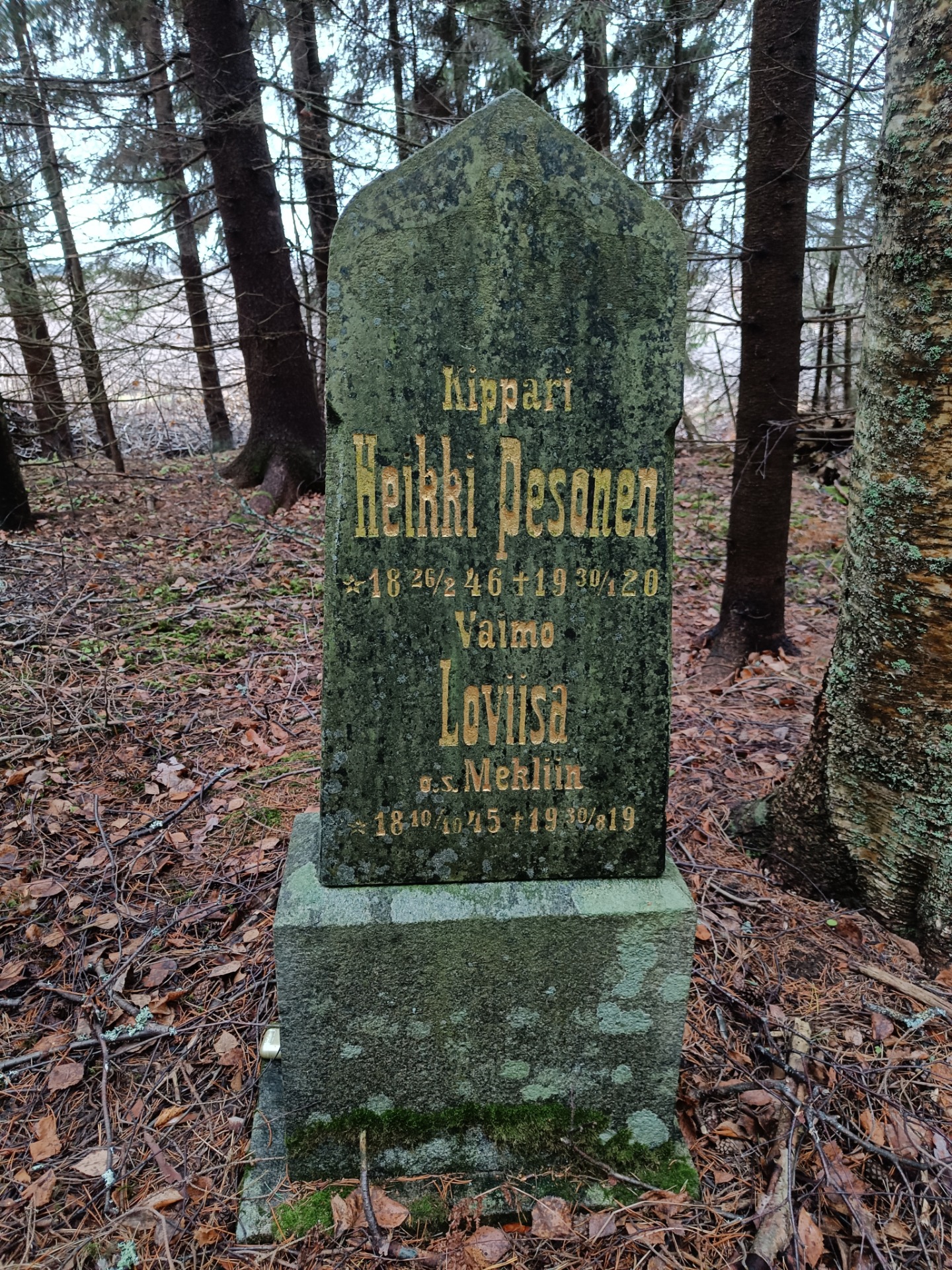
Heikki Pesonen
Heikki “Ukko” Pesonen was born in Haapajärvi, Kiuruvesi, on February 26, 1846, and died on January 30, 1920, being nearly 74 years old at the time of his death. After first working in service in his home parish, he became the steward of the Mattila estate in Maaninka, owned by Captain Kohlström, and the Suovu estate in Karttula, also owned by Kohlström. But his heart was set on the waters, and so he became a driver on the steamboat “Ansio,” which operated between Iisalmi and Kuopio, from which he then transferred to the steamboat “Tähti” as captain. He served in this position continuously for nearly 30 years, receiving a medal from the Finnish Economic Society. After tending to his farm for a time, he became captain of the steamboat “Ilma” and commanded this vessel for about 10 years.
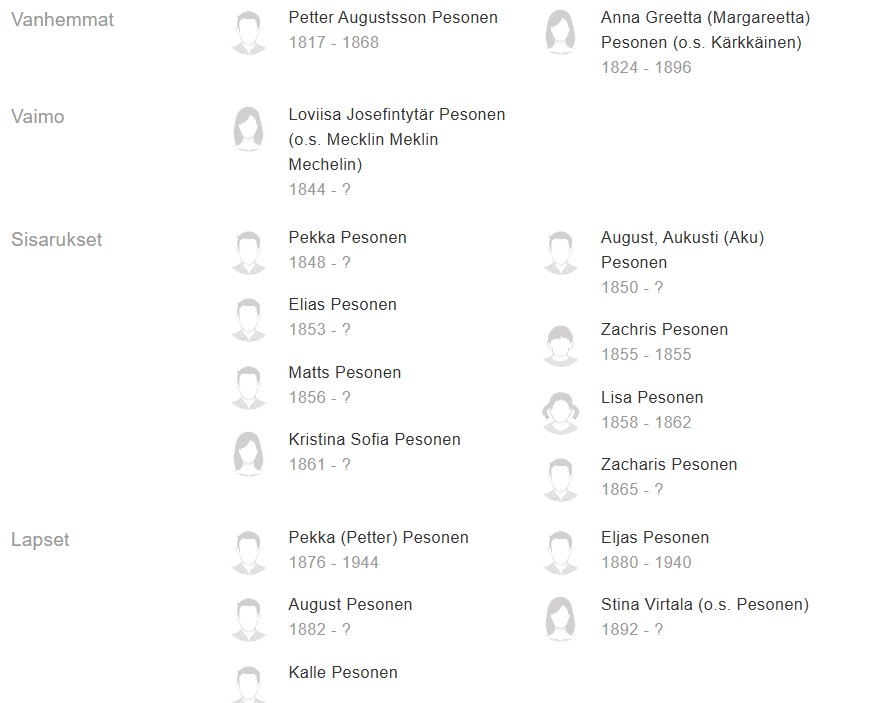
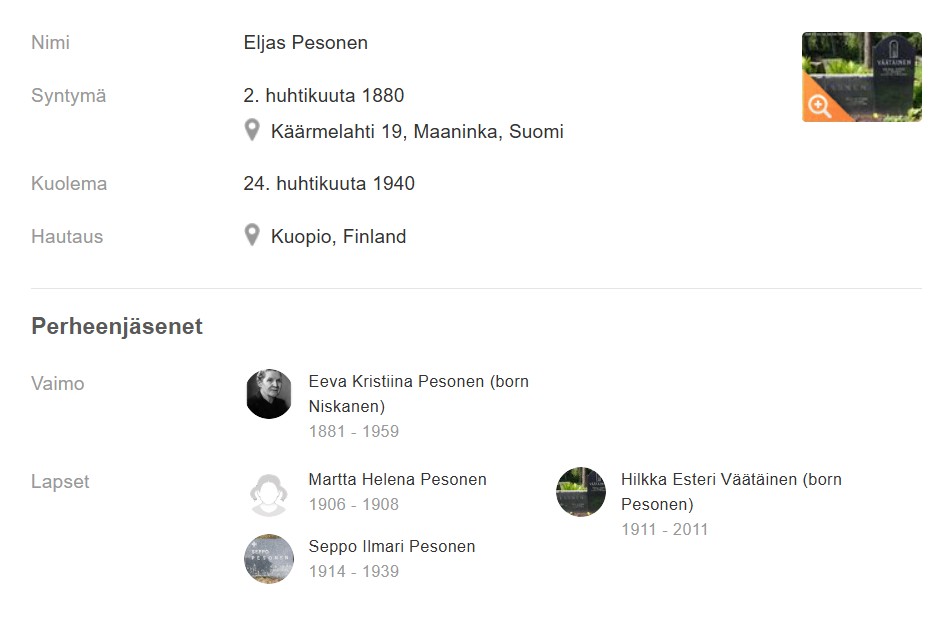
Eljas Pesonen
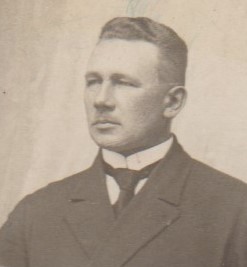
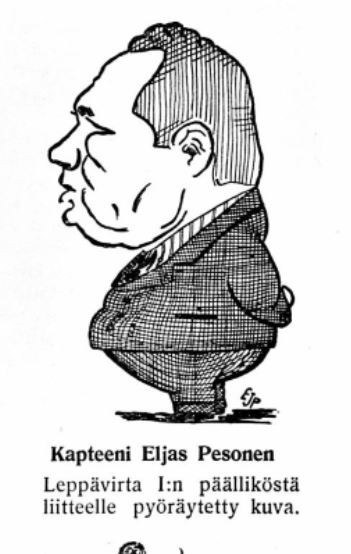
Article in Savo newspaper 02.04.1930
Eljas Pesonen 50 years old
Today, out of sheer force of circumstance, Eljas Pesonen turns 50. So it must be believed by everyone, even if it seems unbelievable. Hundreds are the travellers who, still a couple of years ago, would furtively cast admiring glances at the young and vigorous figure of Eljas Pesonen, which graced the bridge of Leppävirta I. But since Eljas became a landlubber, travellers have not often been granted the chance to rest their eyes on his manly proportions. Only now and then, at ships’ arrival and departure times, is his beaming face seen on the quay of Kuopio harbour, and just when one thinks there might be a chance to strike up a conversation, the harbour master has vanished with his jokes and wholesome banter either to the side of another ship or straight to his office, where he now governs the harbour area with all due honour.
It is doubtful whether the post of harbour master offers Pesonen much amusement at this time of year, after he has already spent 25 summers steering the vessels of the Leppävirta company and more than once heated his blood while waiting for the lakes to break free of ice. These days he must look rather enviously at his former colleagues in the trade when they invite him along to the shipyard to watch the vessels being readied, and a neat little curse perhaps circles in his insides as the other captains tap the ship’s side with the tip of their canes, pointing out where a bit of paint would do nicely. But a person gets used to anything, and once Eljas Pesonen has happily seen a few more summers go by, the fairer sides of this life ashore will bring his mind into balance, and the restless stirrings of spring will then have vanished without a trace.
If anyone has somehow formed the mistaken notion that Eljas Pesonen is not the right man in the right place as harbour master, such a person’s mental gifts can only be pitied, and they should be urged to drop by Eljas’s little shop without delay, where everything runs as precisely as the ticking of a clock—though not in the deadly dull and monotonous way often imagined of office work, but as if greased with ever-melting butter. When a man has spent decades filling his lungs with the slightly tinted air above the inland lakes, he is capable of anything, and Eljas Pesonen stands as living proof of this.
Has Pesonen been seen at skating competitions, either at the finish line with a stopwatch in hand or along the track urging the boys on? The youthfulness that marks his every move carefully conceals that slightly round and plump feature which, in keeping with family tradition, has appeared to adorn his midsection. Now that the red-letter day has come, Savo extends its warmest congratulations, and each one of us here in the editorial office gives an individual handshake to Eljas’s broad and honest palm. Cheers to the man!
Kalle Pesonen
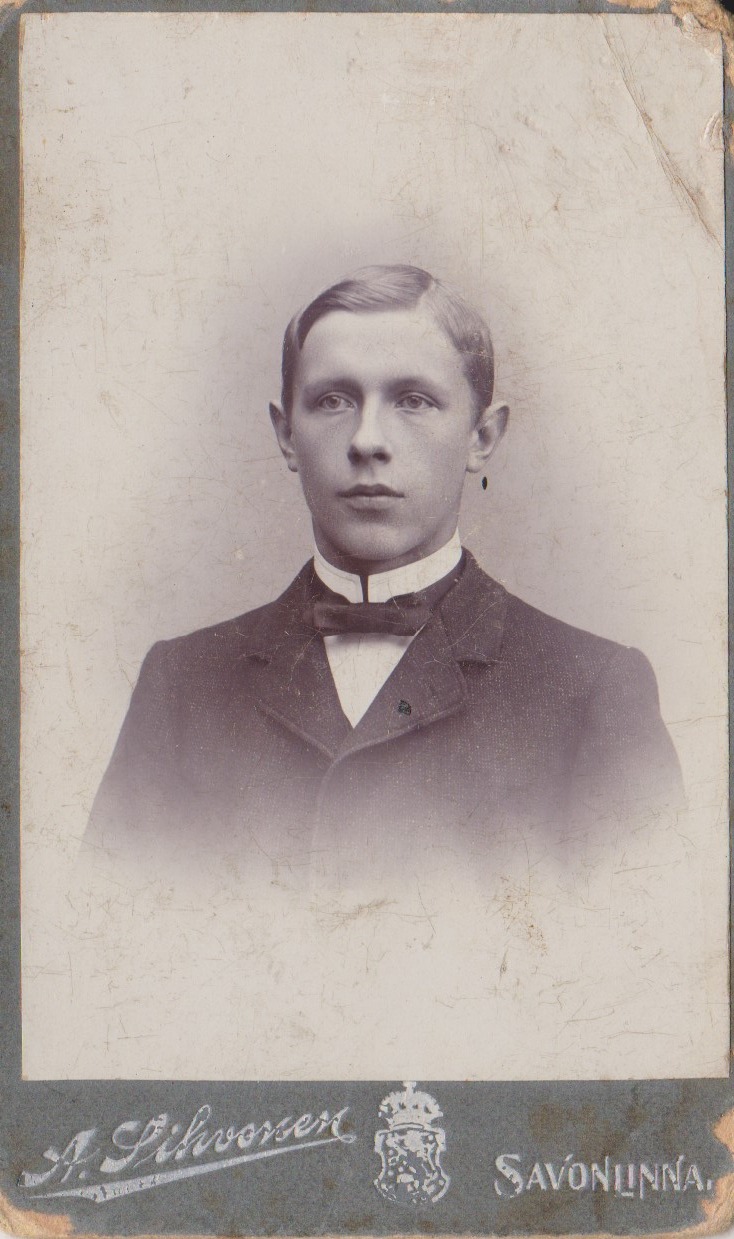
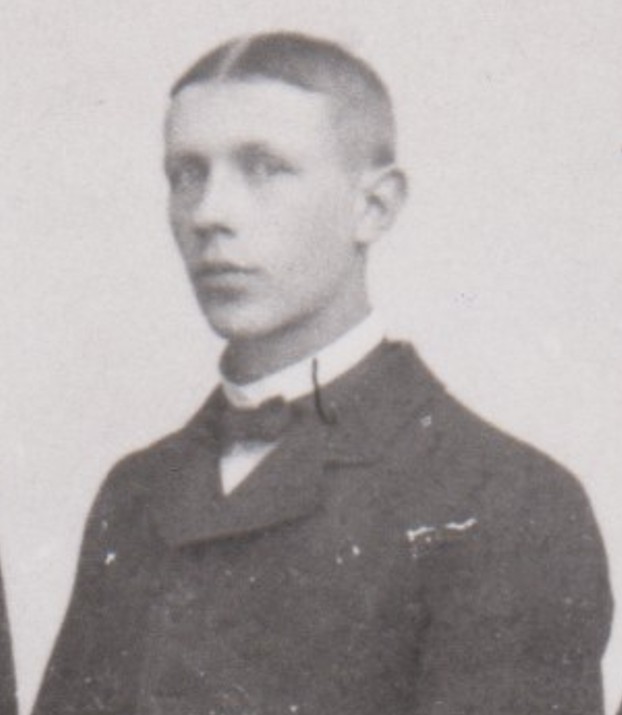
Kalle Pesonen was born on 4 December 1885 and died at his home in Tuovilanlahti on 15 December 1938.
Between the Korkeakoski River and Mustanlähde, which flow through the village of Tuovilanlahti, Kalle Pesonen founded a repair workshop in 1917. He possessed the necessary repair skills, as he had completed the chief engineer’s examination at Kuopio Industrial School and gained experience as a ship’s chief engineer. He took as his assistant his wife Mandi’s brother, Eino Pulkkinen, who had completed the assistant engineer’s examination at the same school.
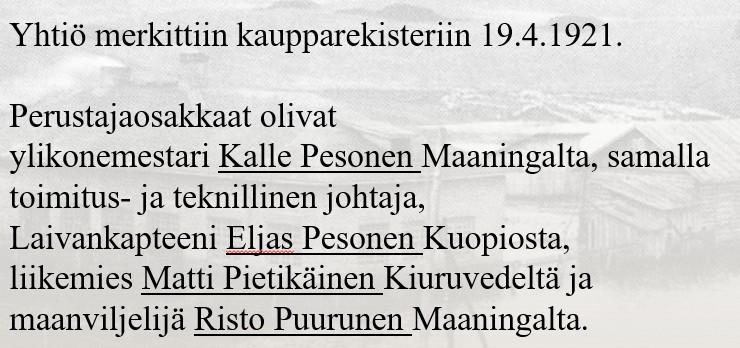
In 1921, Tuovilanlahti Machine Workshop Ltd was founded, and the following persons were involved in the company:
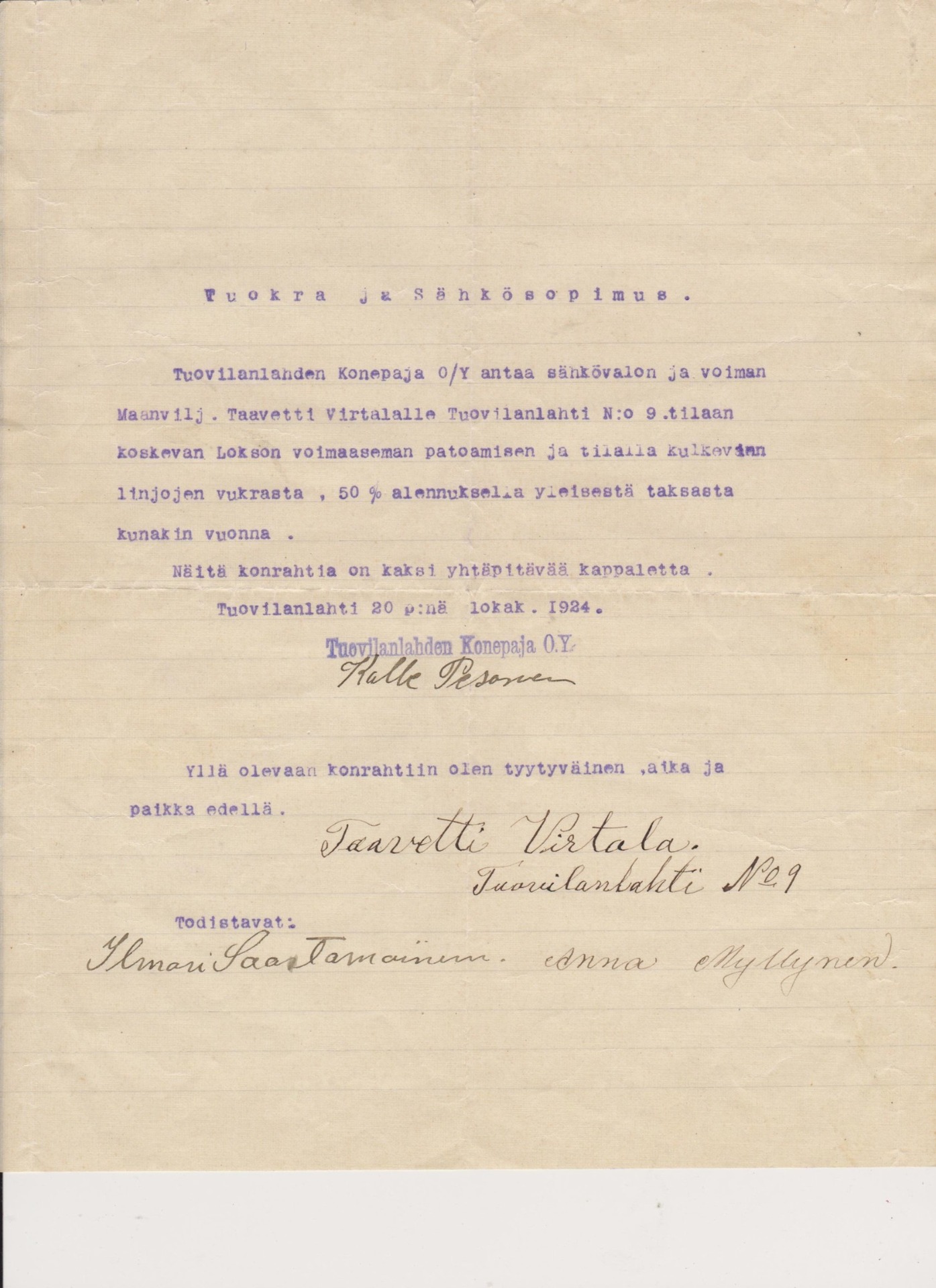
To electrify the machine shop, Kalle Pesonen was involved in establishing the Lokso dam, and as proof of this there is the original land lease agreement
The machine shop also supplied electricity to the village, and when someone got an electric shock from the latch of the cowshed door and complained to Kalle Pesonen, he might say:
"Well then, open that door again with gloves on. I’ll come over when I have the time. Right now I have to go to Esalanmäki, because some rascal there has been throwing stones at the pole and managed to break the insulator."
At that time in Tuovilanlahti, the title of master was probably regarded as a higher distinction than that of director. Pesonen had received a solid basic education and was also technically gifted. In addition to machine construction, he had extensive command of electrical engineering. He may have been absent-minded, at least when, setting out to repair a high-voltage line, he forgot to switch off the power.
After climbing up the pole, he received a powerful electric shock, but in the last flicker of consciousness he managed to twist his pole-climbing irons free from the pole. If he had been left hanging by his climbing irons, his ankles would have been broken. He himself reflected on the accident: "It doesn’t take long to get down, once the spikes are pulled out of the pole. I found myself on the ground when I woke up."
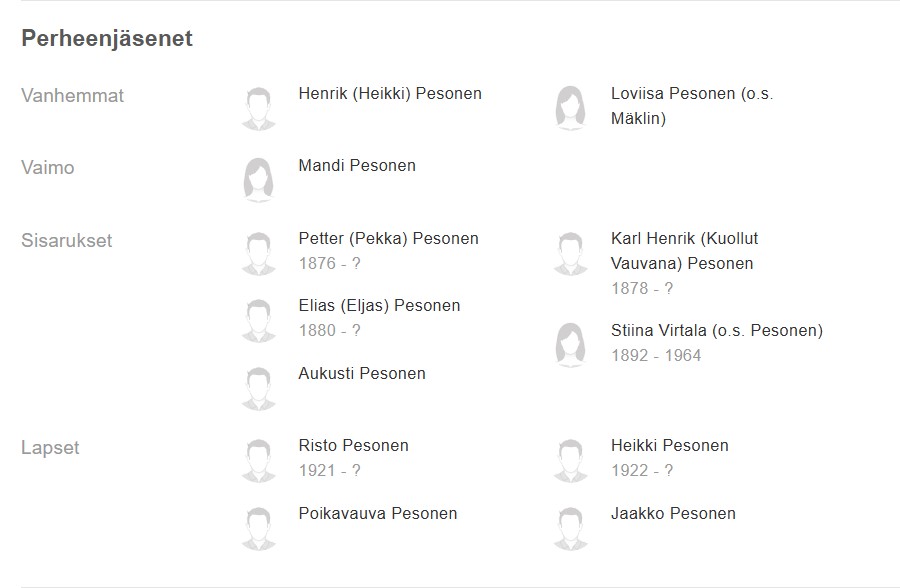
August Pesonen
August Pesonen

Pekka Pesonen
Stiina Pesonen
Tekstiä ja kuvia Stiinasta
Pesosen suvun sotapolku
Timo Pesonen
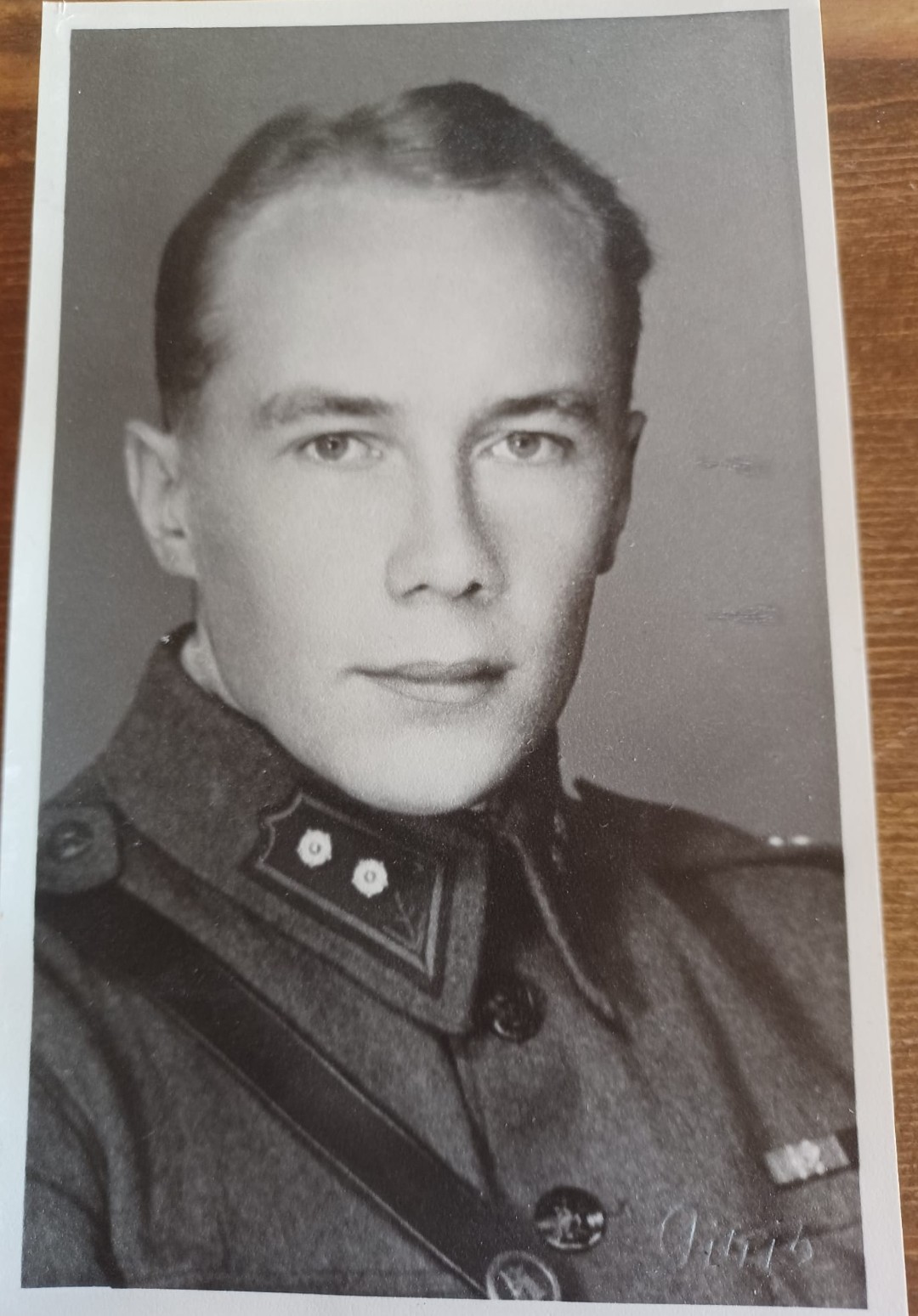
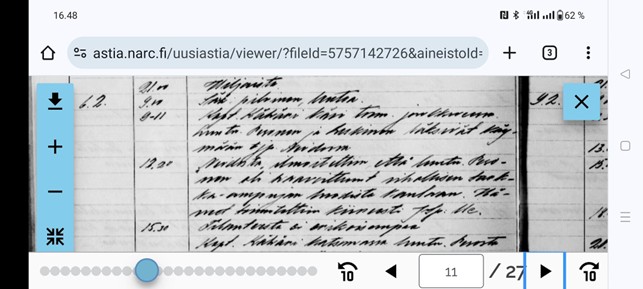
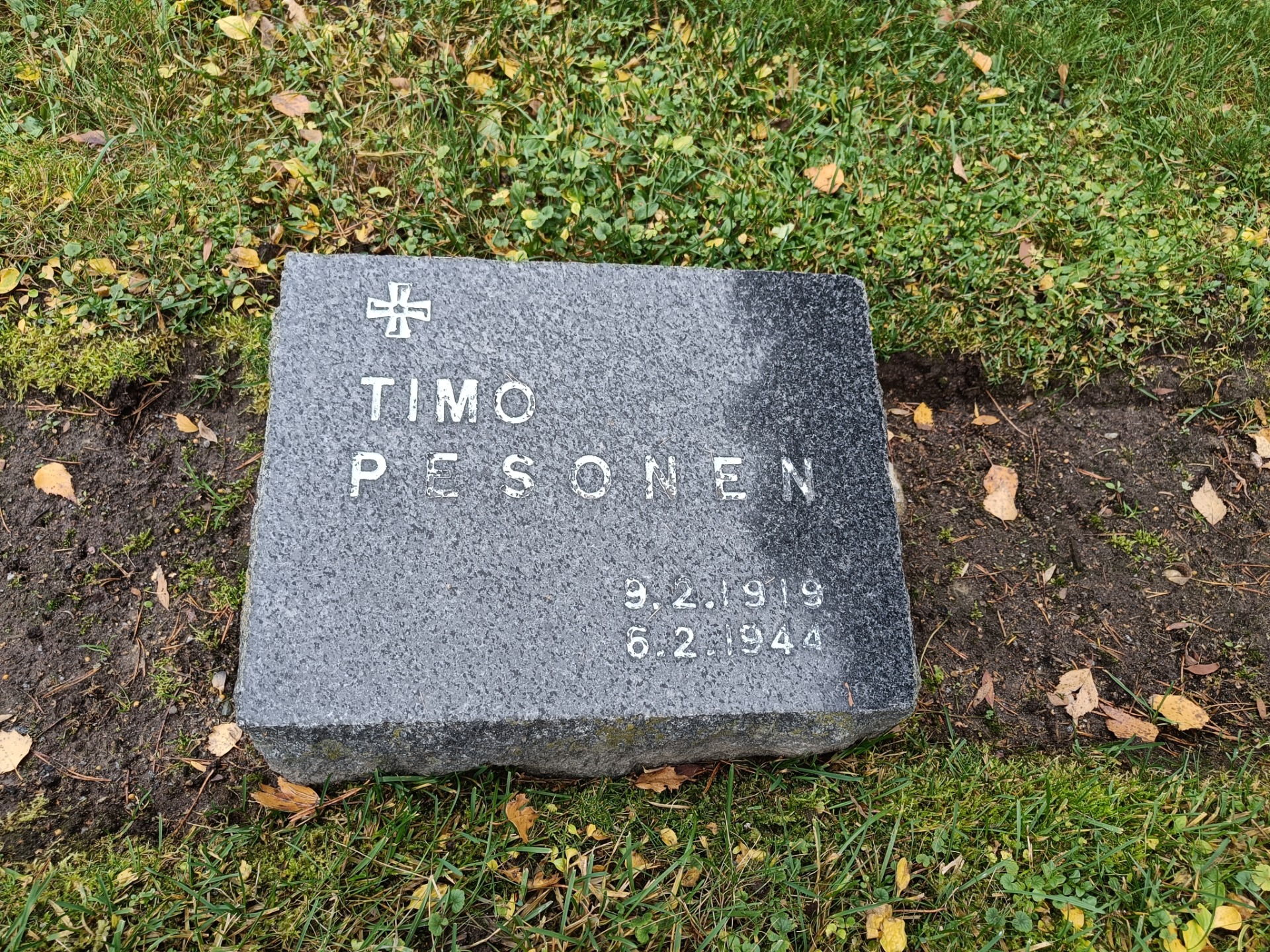
Pekka’s son Timo was a 24-year-old lieutenant in the 17th Mortar Company. He fell in battle on 6 February 1944, and from the war diary that was found, the cause of death was discovered. A Russian sniper had shot Timo in the neck. Below is an image of the war diary.
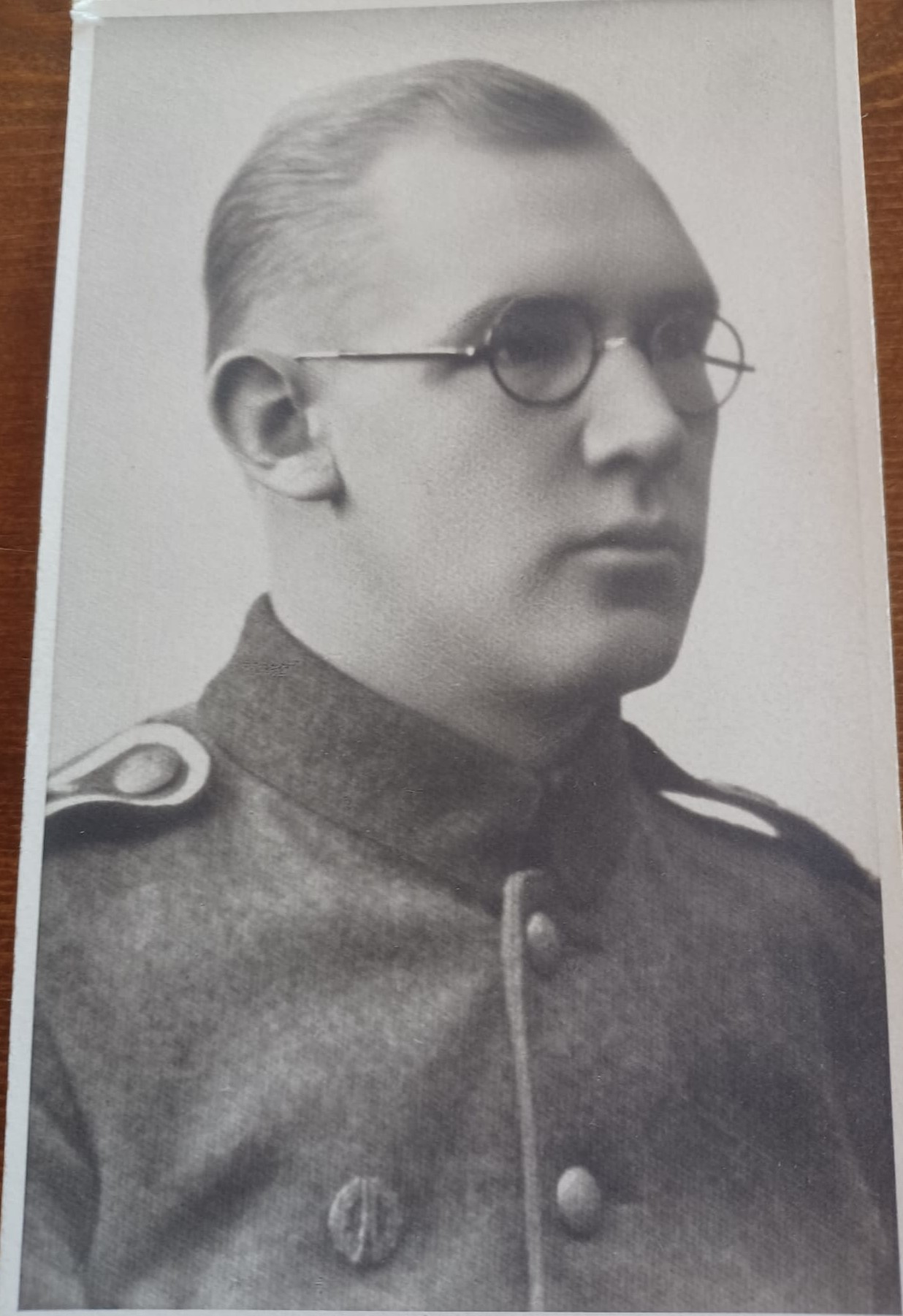
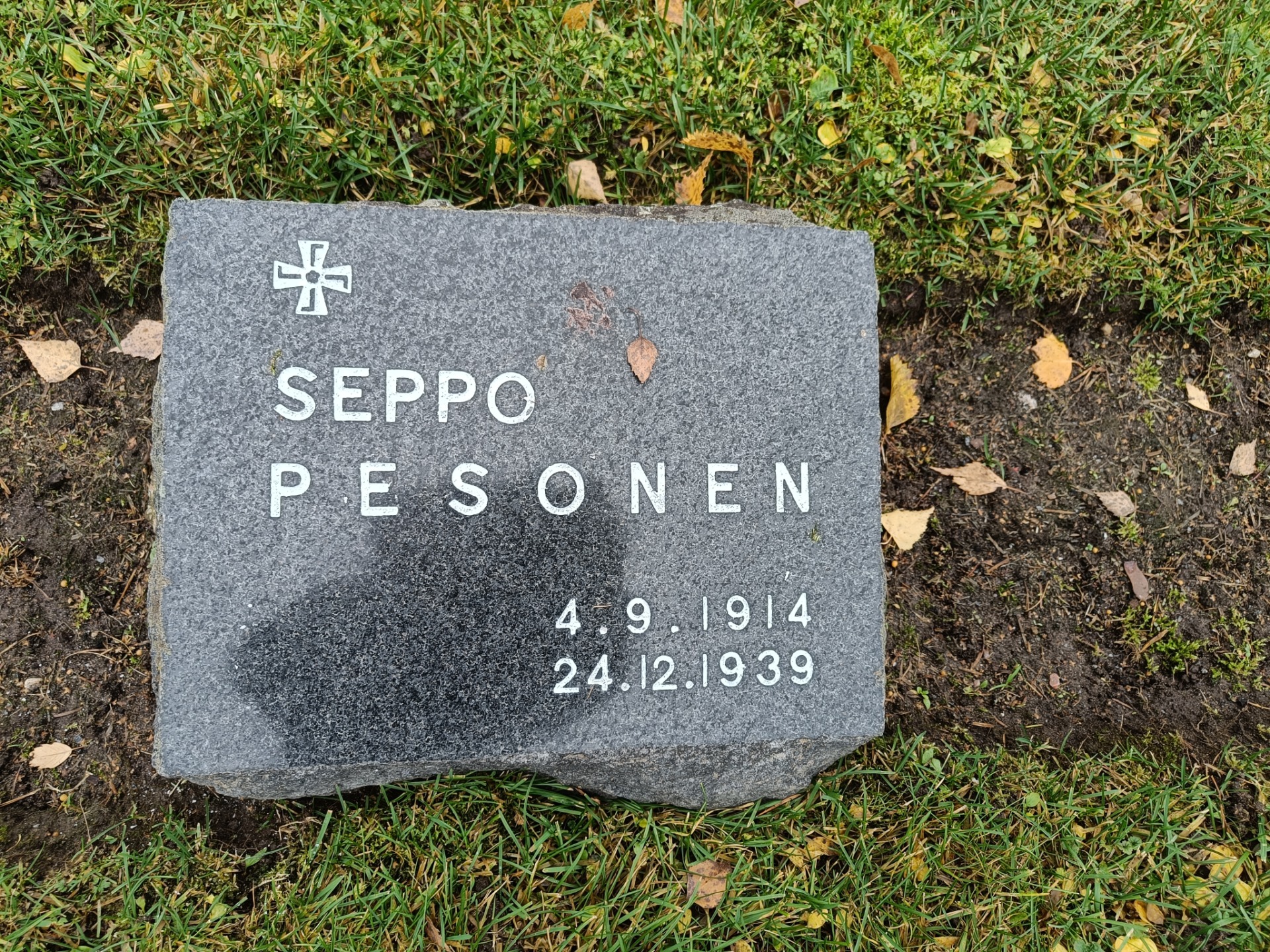
Seppo Pesonen