From the slash-and-burn clearings of Savola
22/10/2025
Written by: Ahti Rytkönen, Savupirttien kansaa. Pages 72–83
The date is 6 June 1928. The author wrote the story in 1930
Images: Photographed by Ahti Rytkönen, images owned by the Finnish Heritage Agency, Ethnological Picture Collection
Images colorized using MyHeritage In Color technology
The slash-and-burn clearing carried out early last June (1928) at Savola in Tuovilanlahti was a noteworthy event. First, it had been a long time since such large areas had been turned into swidden fields in that region, and second, a word collector sent by the Dictionary Foundation happened to arrive on the scene at just the right moment with a camera.
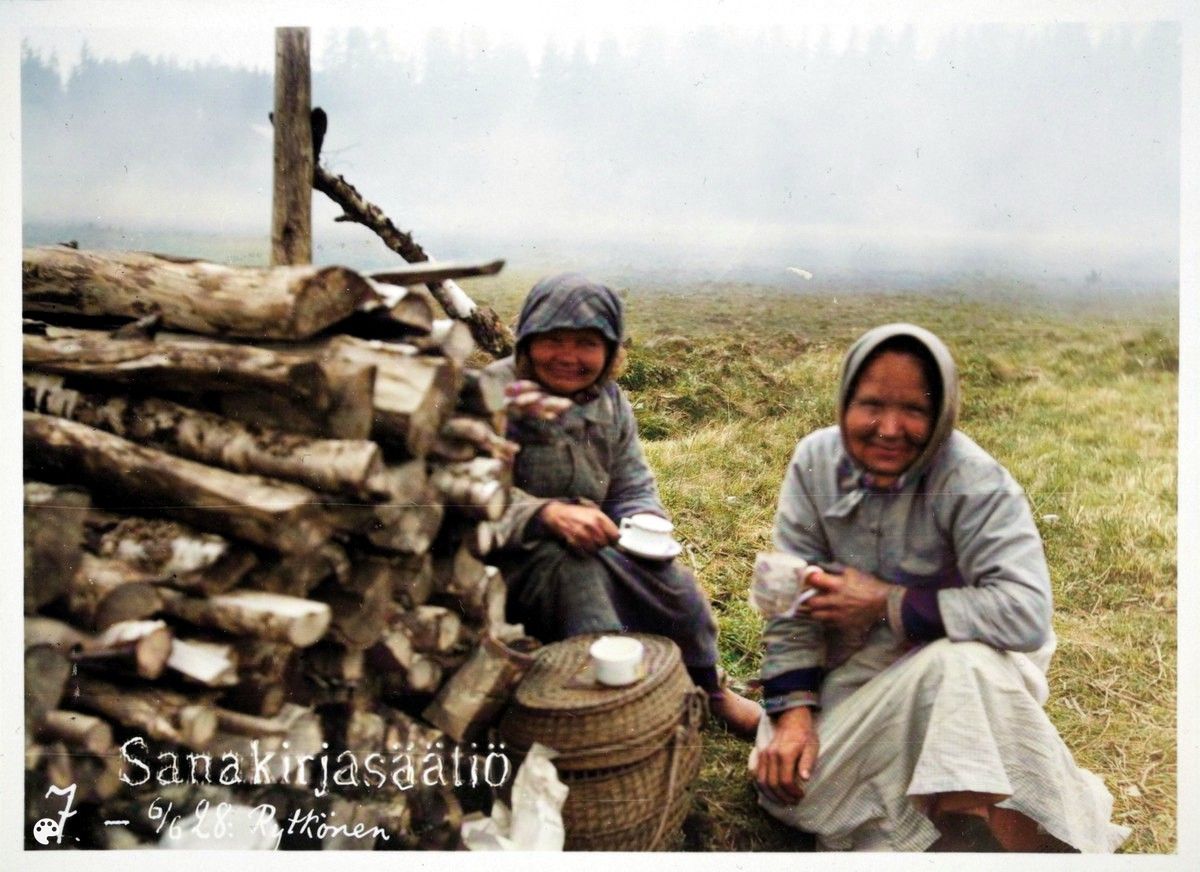
Photographing the slash-and-burn workers was not entirely new at Savola. The men related that some years earlier a photographer had snapped a picture of the men while they were eating. That occasion had stuck in everyone’s memory especially because the photographer had “suddenly taken the shot” at the very moment when Jussi Taskinen was drinking sour milk from a tankard. It is hard to believe that the gentleman with the camera had not quite deliberately timed the exposure for that instant, for it would be too neat to be mere coincidence. But who can say! Since a picture of the slash-and-burn men at their meal had already once been taken, it was decided that this time there would be no more photographs of that sort; instead, a picture would be taken during the after‑meal rest. Taking a mealtime picture would also have been awkward because on this occasion the photographer himself was among those eating. By contrast, the rest after the meal was not so necessary for him, as he belonged to the gentry and could sleep in comfortably until midday.
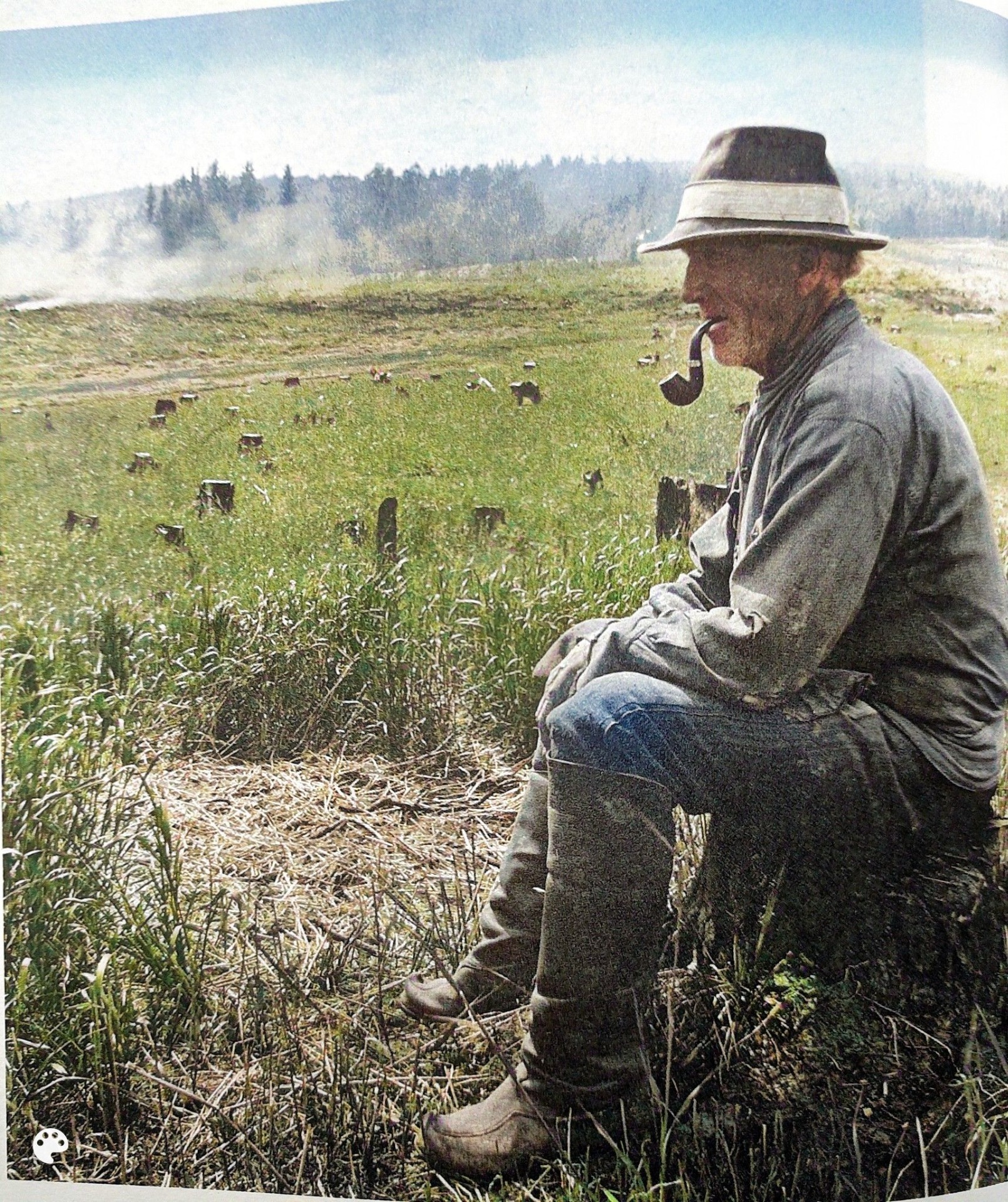
Savola’s swidden was a modern‑day slash-and-burn field. The entire fine forest was no longer felled and given over to the flames. Only the leftover trees that the loggers had left behind were burned. The wood was piled along the edge of the swidden into a breastwork‑like windrow, which, when a suitable wind was blowing, was set on fire along its whole length. Soon the fire roared mightily and a cloud of smoke shrouded the surroundings. Rolling poles were thrust under the windrow, and the burning logs were flung in an arc forward to burn the fresh ground. This was called “rolling” the swidden. Sweat ran down the rollers’ faces. Soot penetrated even through their clothes and, mixing with the sweat, formed a shiny layer on the skin, so that the rollers looked like “negroes.” It is no wonder that in earlier times, when great coniferous swiddens were rolled, slash-and-burn clearing was called “roasting meat in rags.” “So, have you had meat roasted in rags yet?” people would ask when they wanted to know whether the swidden had already been burned.
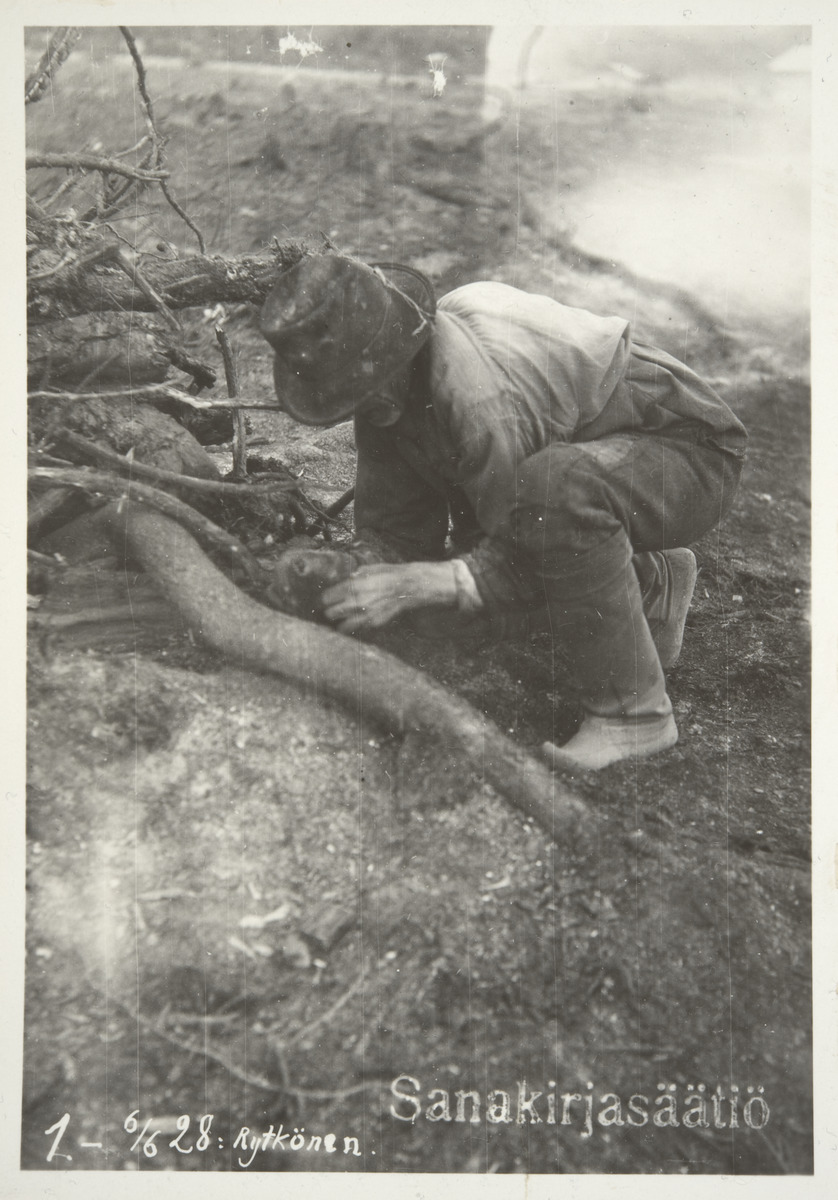

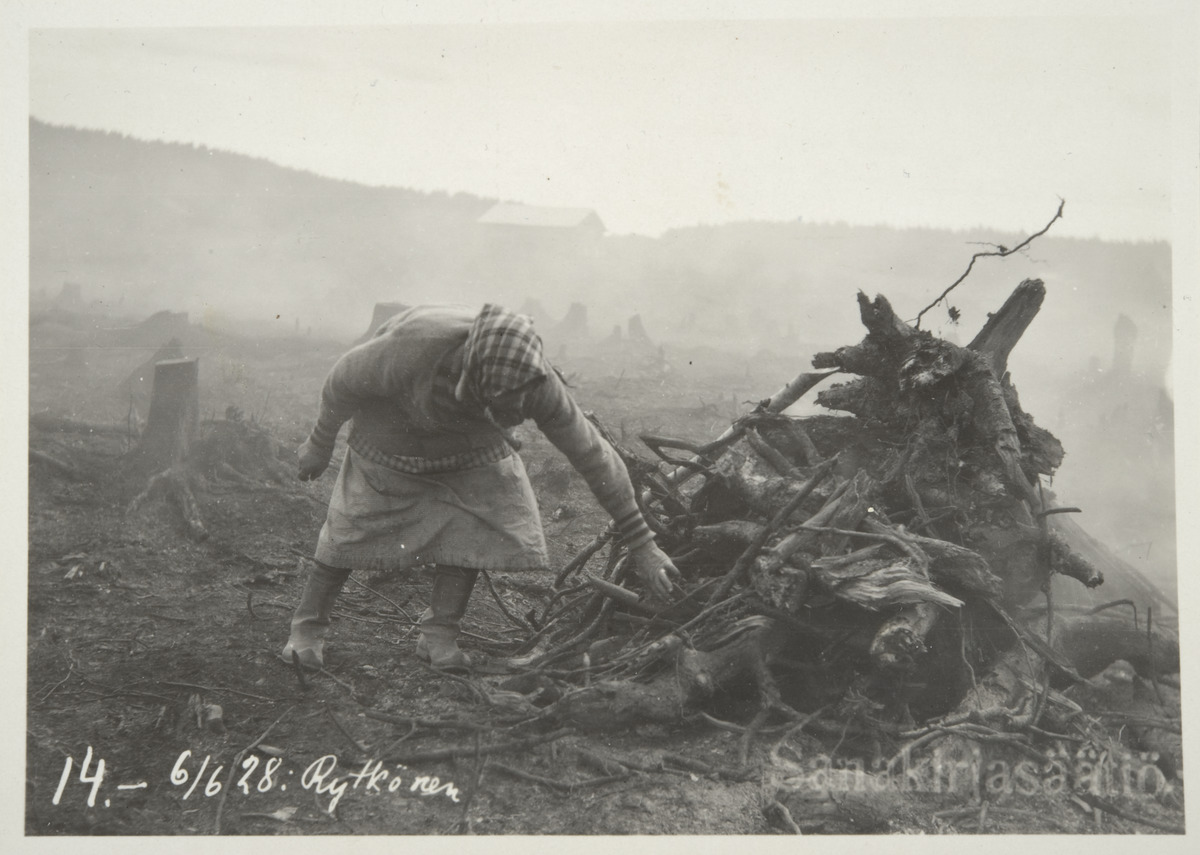
However, when the burning is done, the ground surface does not have time to become completely blackened everywhere. Bare patches remain that must be burned afterwards. This begins the burning of the bare patches. Onto the unburned spots are piled pieces of wood, brushwood, roots and even fire-edges (tree trunks that have burned down to the end) from the burn (as the slash-and-burn area is called after burning). The gathering of this material is called “rovitsu”, since it produces pyres. When lighting the pyres, the method was to sweep glowing embers around them using young spruces trimmed to resemble a long-handled broom. Those who could not find a spruce made a “hosa” or “hoska”, as the ember-sweeping broom is called, from some young deciduous tree by twisting the remaining top branches into a tuft. The burning of the pyres continued even after the bare patches had disappeared from sight. Every unburned piece of wood was carefully burned. The men chopped roots with axes and tore them from the ground. The women picked up loose pieces of wood into piles, performing what was called “stick gathering” or “stick picking”. This stage following the burning of the bare patches is called “fire cleaning”. In earlier times, when cleaning the burn, it was not permitted to throw a single stick away from the burned area, for it was said, “whoever throws a stick from the burn into the forest, it is the same as throwing a cake into the forest.” The slash-and-burn farmers of Savola no longer seemed to care about that prohibition.
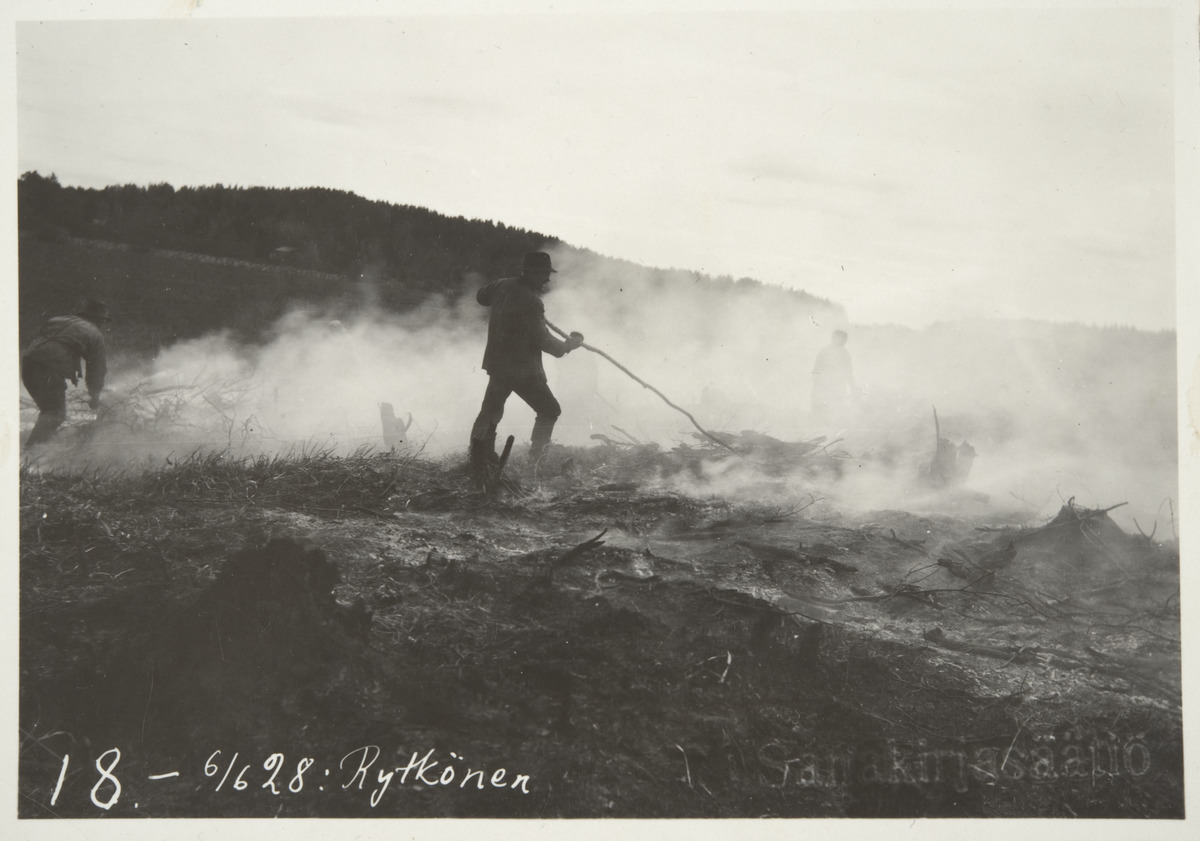
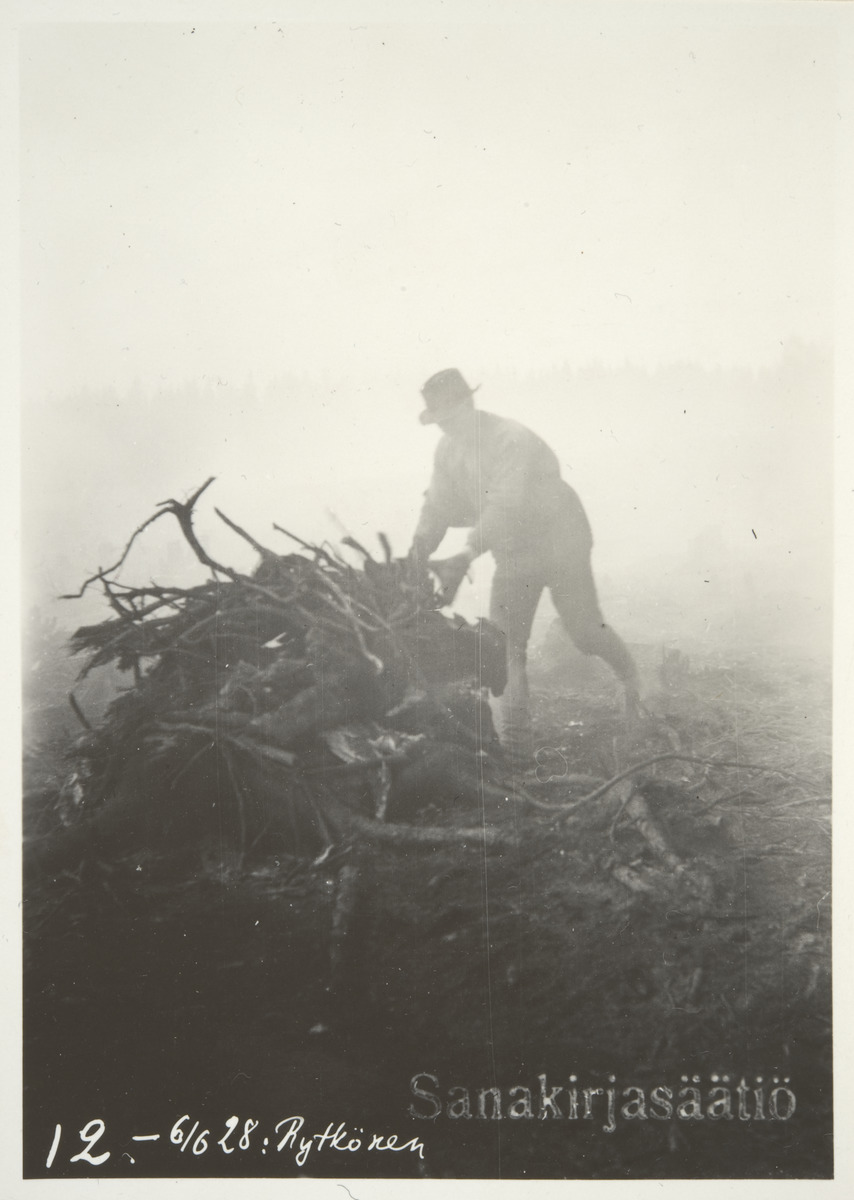
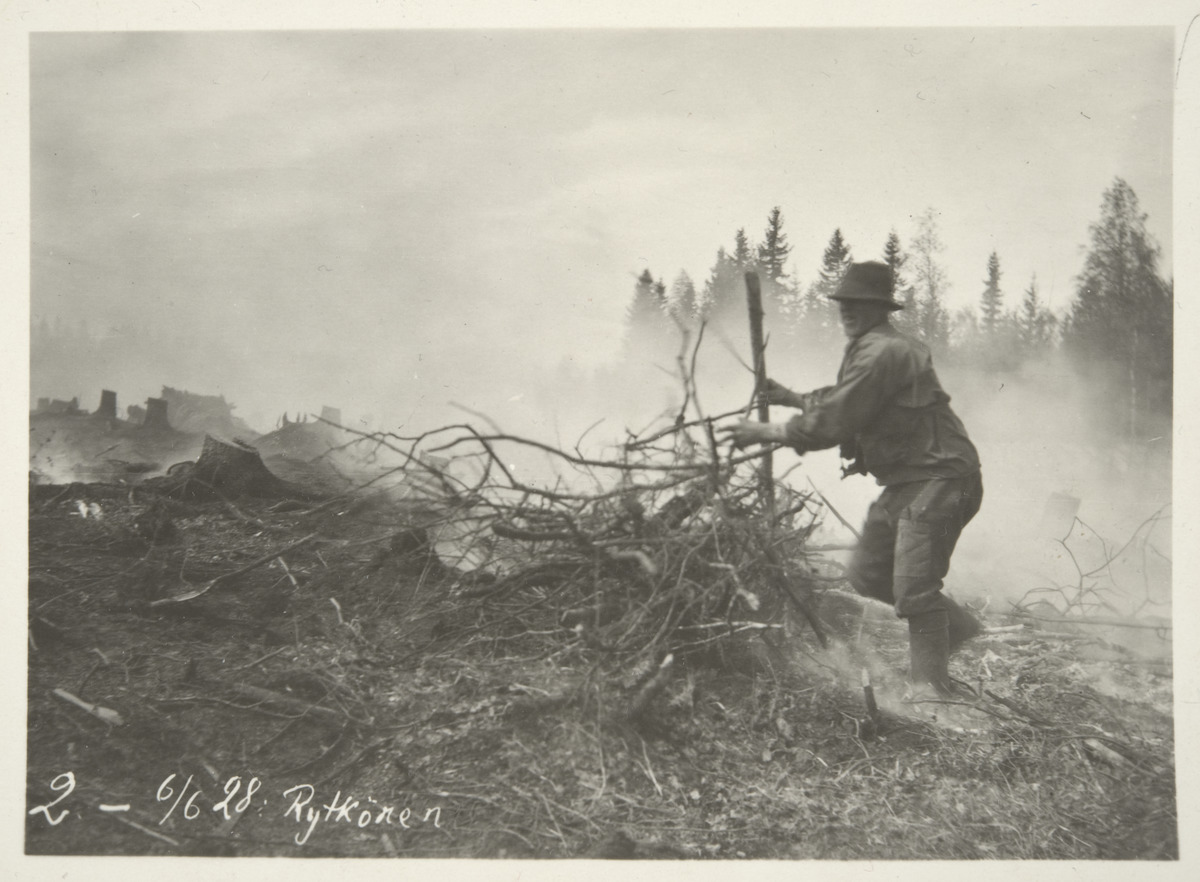
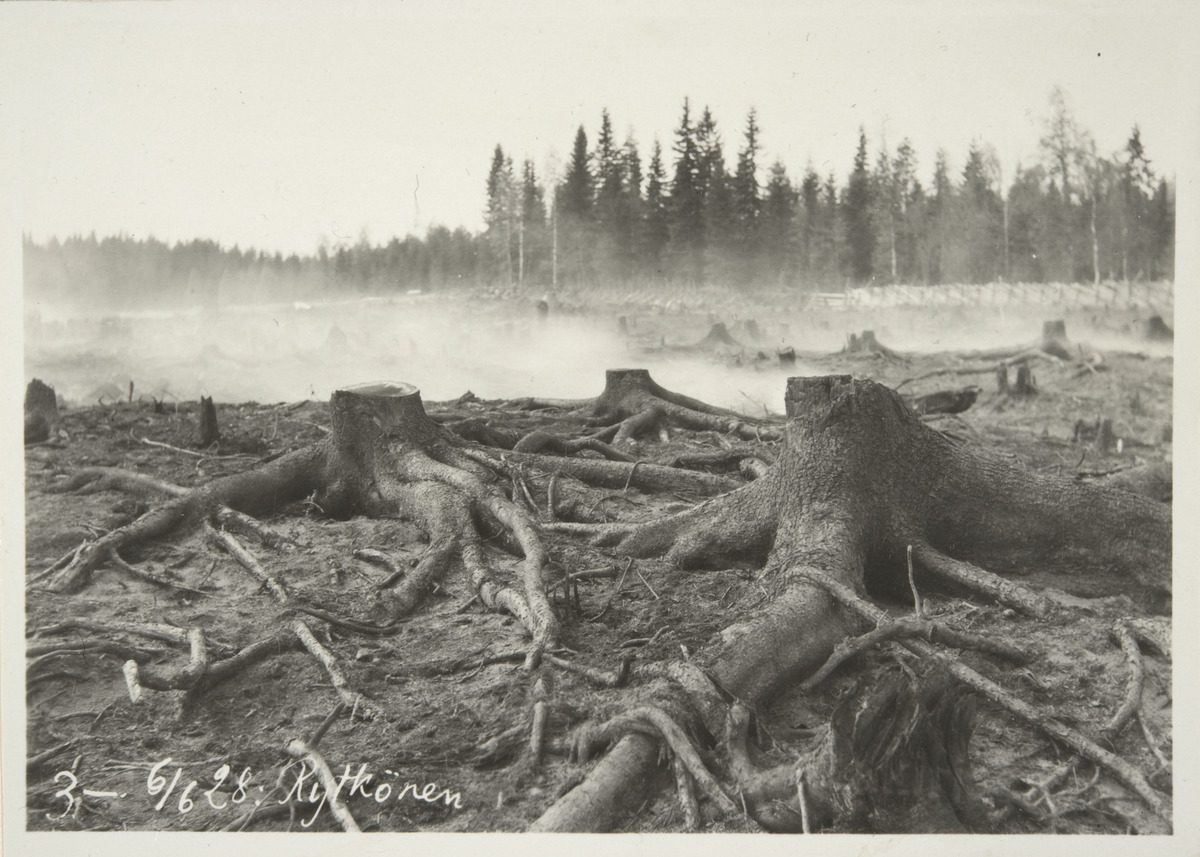
Slash-and-burn land is also called the land of fire. After the burning has taken place and the smoke has cleared, a black land of fire appears, resembling a seabed full of octopuses. The charred stumps are like the bodies of beasts, and the tangled, criss-crossing roots are like tentacles with which it can be imagined reaching for the man who dares to become a fire-ploughman. But before ploughing, the fire-sowing must be carried out. The Savola slash-and-burn field was sown by the old, experienced Aaro Haatainen, whom his mother, when he was still a half-grown boy, on a certain St. Tobias’ Day half a century earlier, had shaken out of his fur coat onto the floor of Savola’s spacious main room. Aaro scattered oat and rye seeds onto the surface of the burned ground. It was customary to sow approximately 3.5 hectolitres of oats per hectare and 1 hectolitre of rye per hectare. Rye that is sown in this way at the same time as some spring grain is called “root rye” or simply “rooted.” In earlier times, one measure of rye was sown for every six or seven measures of other grain, but some are said to have sown rye even more densely.
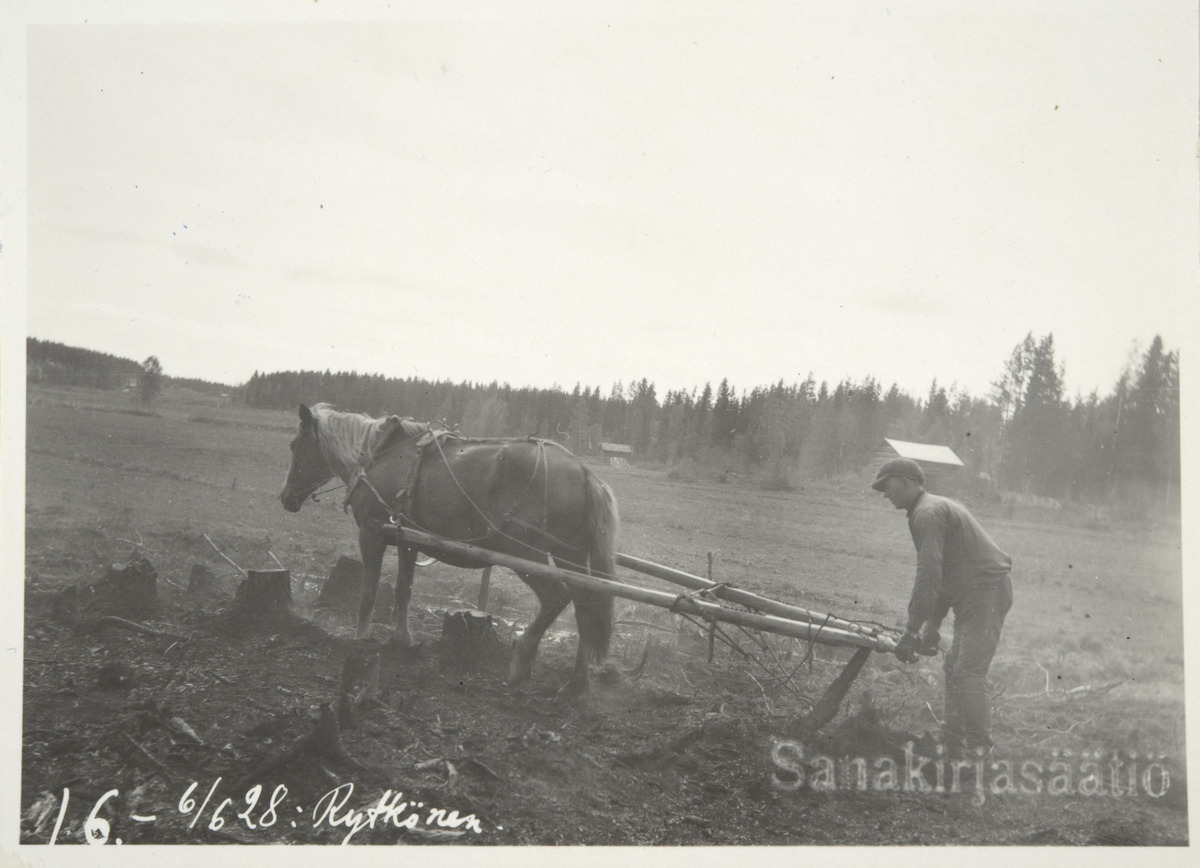
Ploughing the seed into the soil requires patience from both man and horse. Every so often the claws of the slash-and-burn plough catch on the tendrils of roots. Fortunately, Savola’s swidden was not a stony one, so the ploughmen were spared at least that nuisance. A frustrated ploughman might be told, “you didn’t know how to start ploughing from the right edge” or “cut the root when it hits the furrow.” Our root image shows that it is useless to choose a starting edge and that it is impossible to choose a ploughing direction that follows the roots.
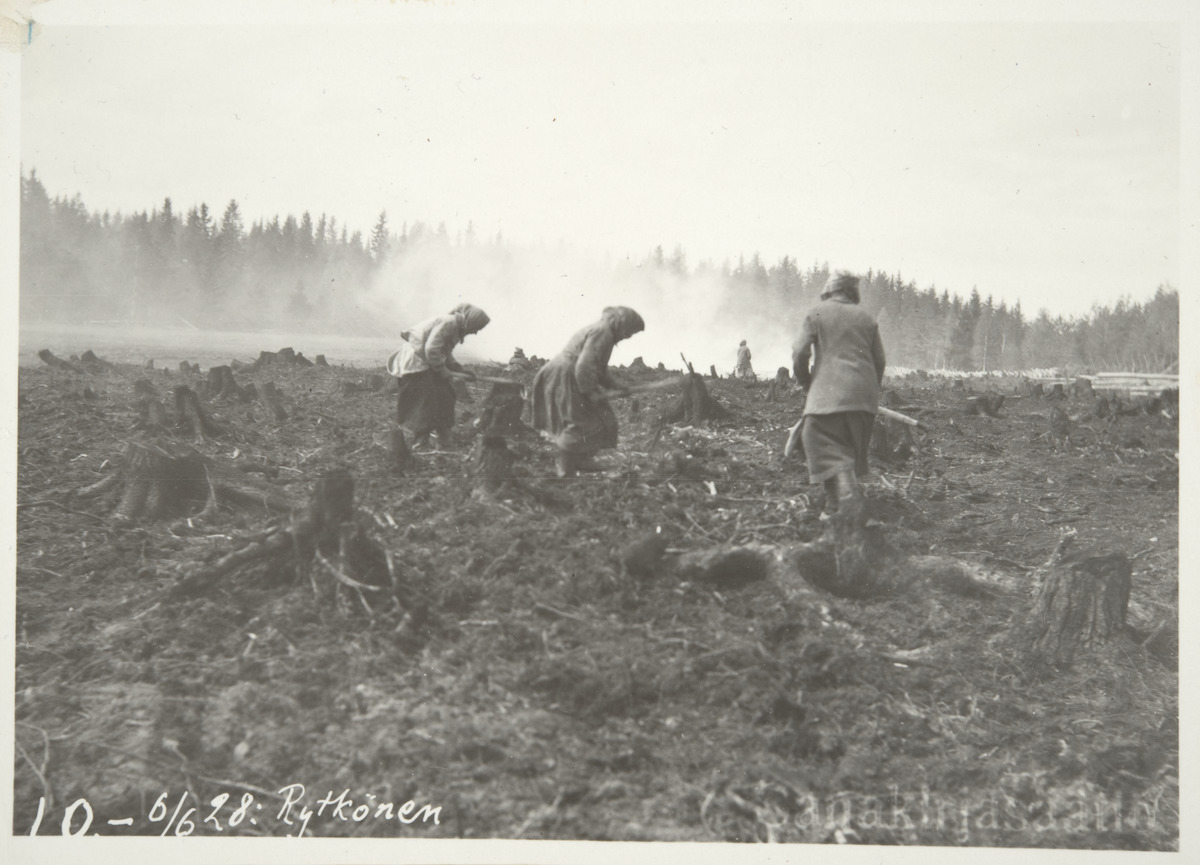
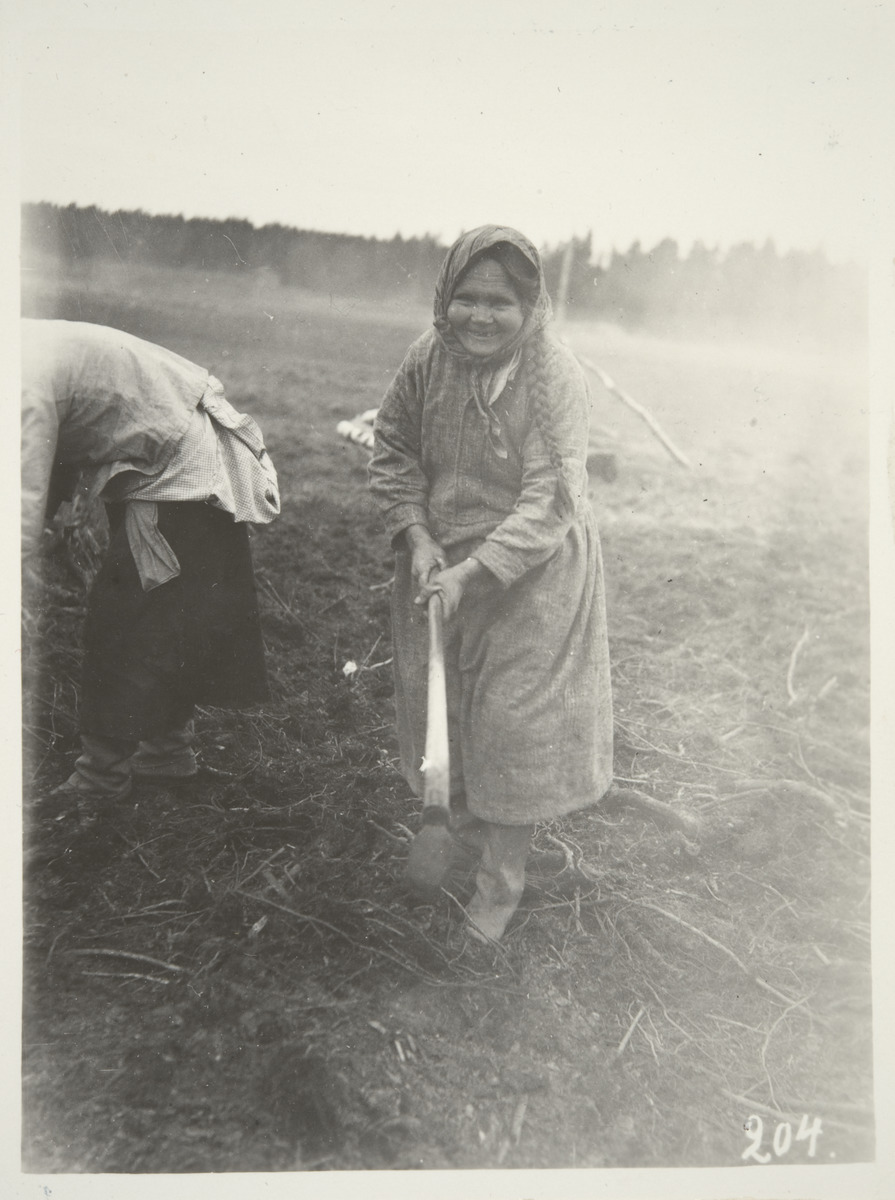

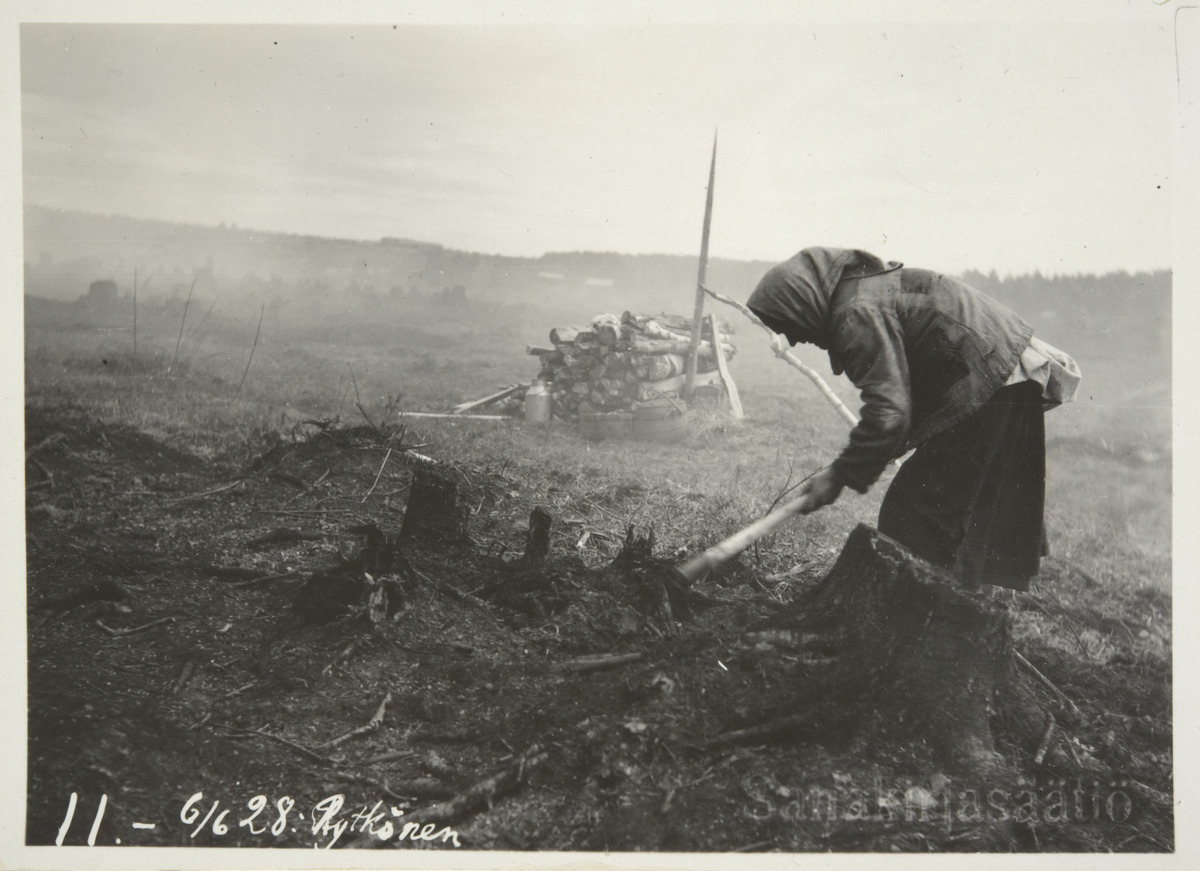
When some of Savola’s slash-and-burn fields had been ploughed, the “hoe men” set to work. Four “womenfolk” took up the fire hoes, which crumbled the soil for the final time. In rhythm with the swinging of their braids, they stamped the hoed ground with their feet, and afterwards the seed lay waiting for rain. In earlier times, the fire‑hoers carried a broom with which they swept up the seeds that had scattered onto the surfaces of stones and the tips of stumps. Now the hoers could be seen raking the grains out from the cracks of the stumps with their fingers, and when some seed had lodged in a place where it would never sprout, someone jokingly threw soil on top of the stump. Hoeing a burned field is a task that also demands skill. An unskilled hoer scrapes the seeds into heaps, leaving barren patches in the burn, called “gleams”. The spots the ploughman has left unploughed are called “piellos”.
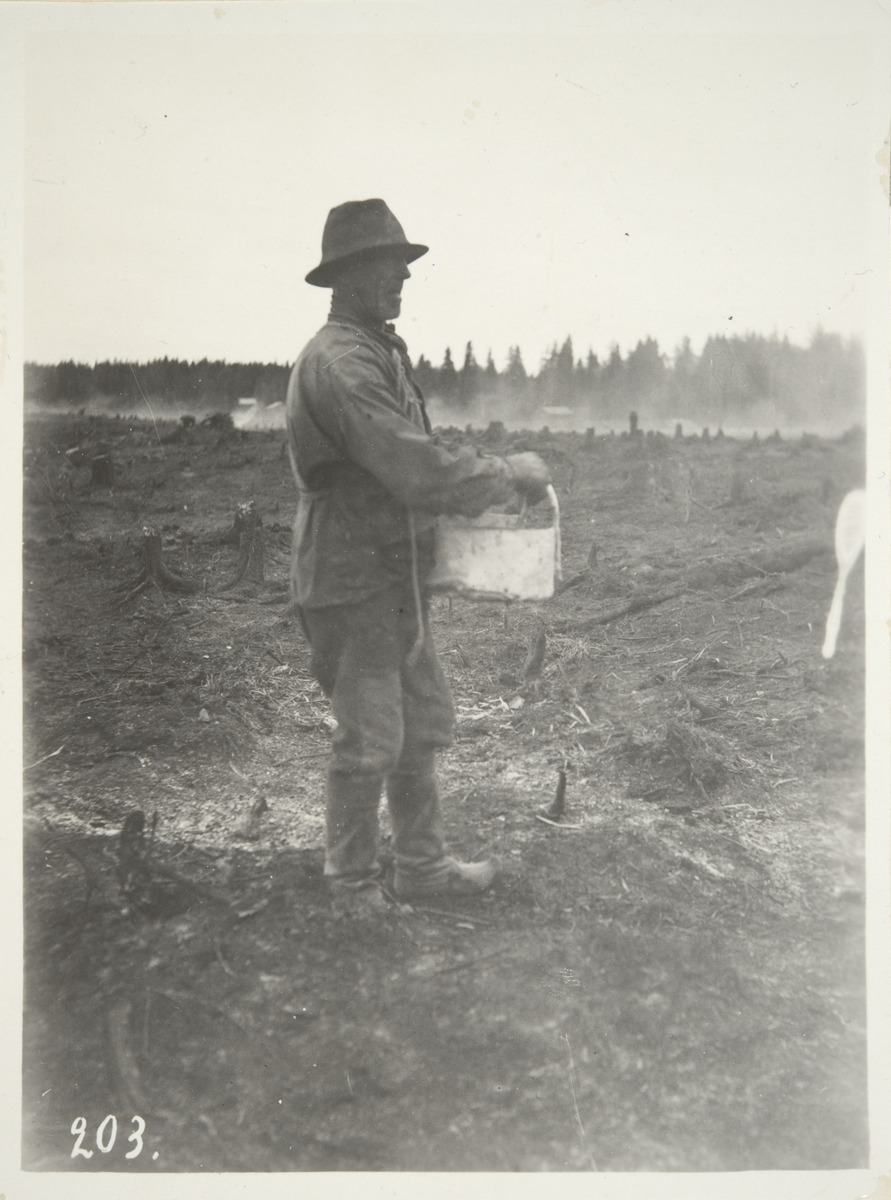
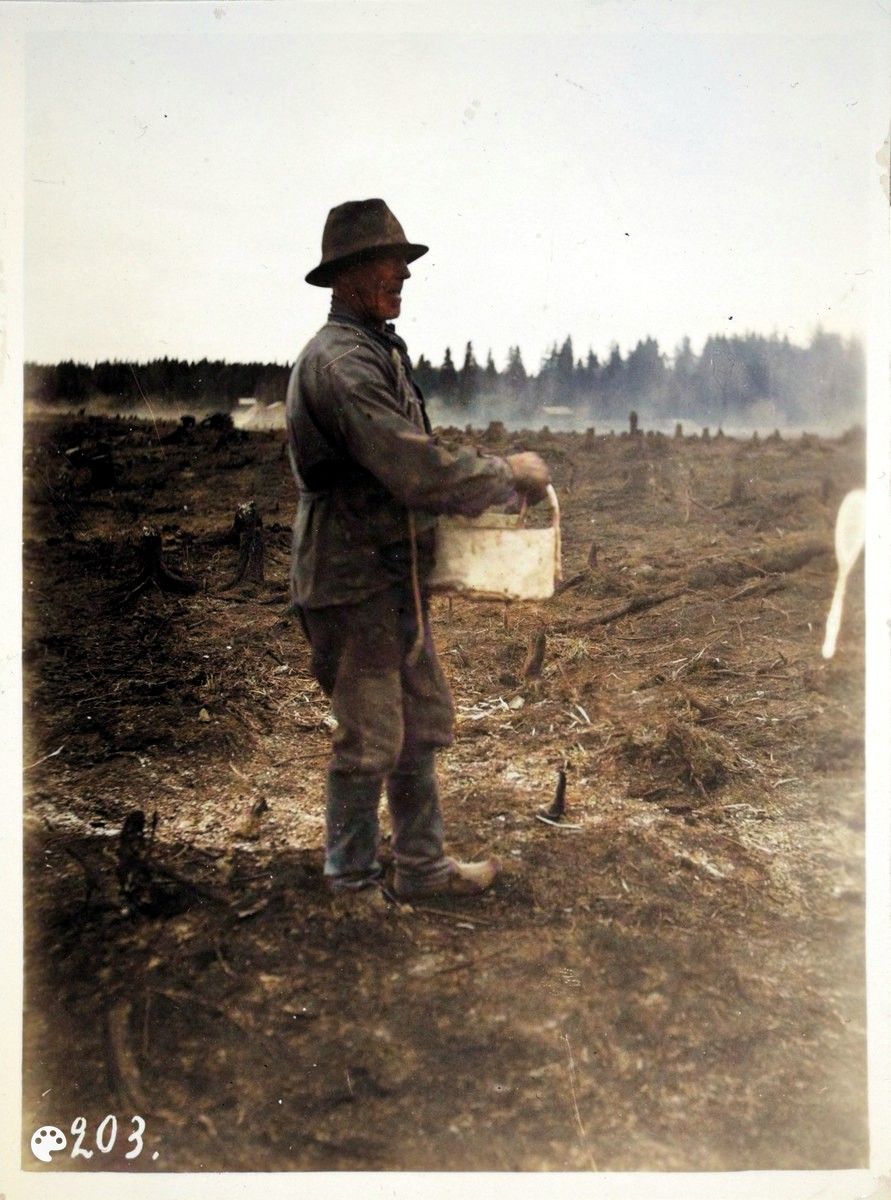
But other useful plants besides oats and rye were sown on Savola’s burned fields. When, at the beginning of the bird cherry’s flowering time, a windless day arrived, the old slash‑and‑burn farmer set out, following ancient custom, to sow fire flax. Sowing that crop also does not go well for the inexperienced, for the seeds must be scattered so thickly that a bedbug can step from one seed to another. Guided by the signs of nature, Aaro also determined the sowing time for the turnips on the burned land. When, at the end of June, a white, sour‑milk‑like substance appeared on the alder leaves and between the branches—when the alders “curdled”—he went out to sow turnips on the burned ground. He moved along in a crouch over the area destined for turnips, took seeds from the birch‑bark cup he held in one hand, placed them on his tongue, and spat them out to both sides. By the evening of the sowing day, the turnip man’s lips were so sore that he could not bear to eat with a spoon, but had to drink his sour‑milk gruel straight from the bowl.
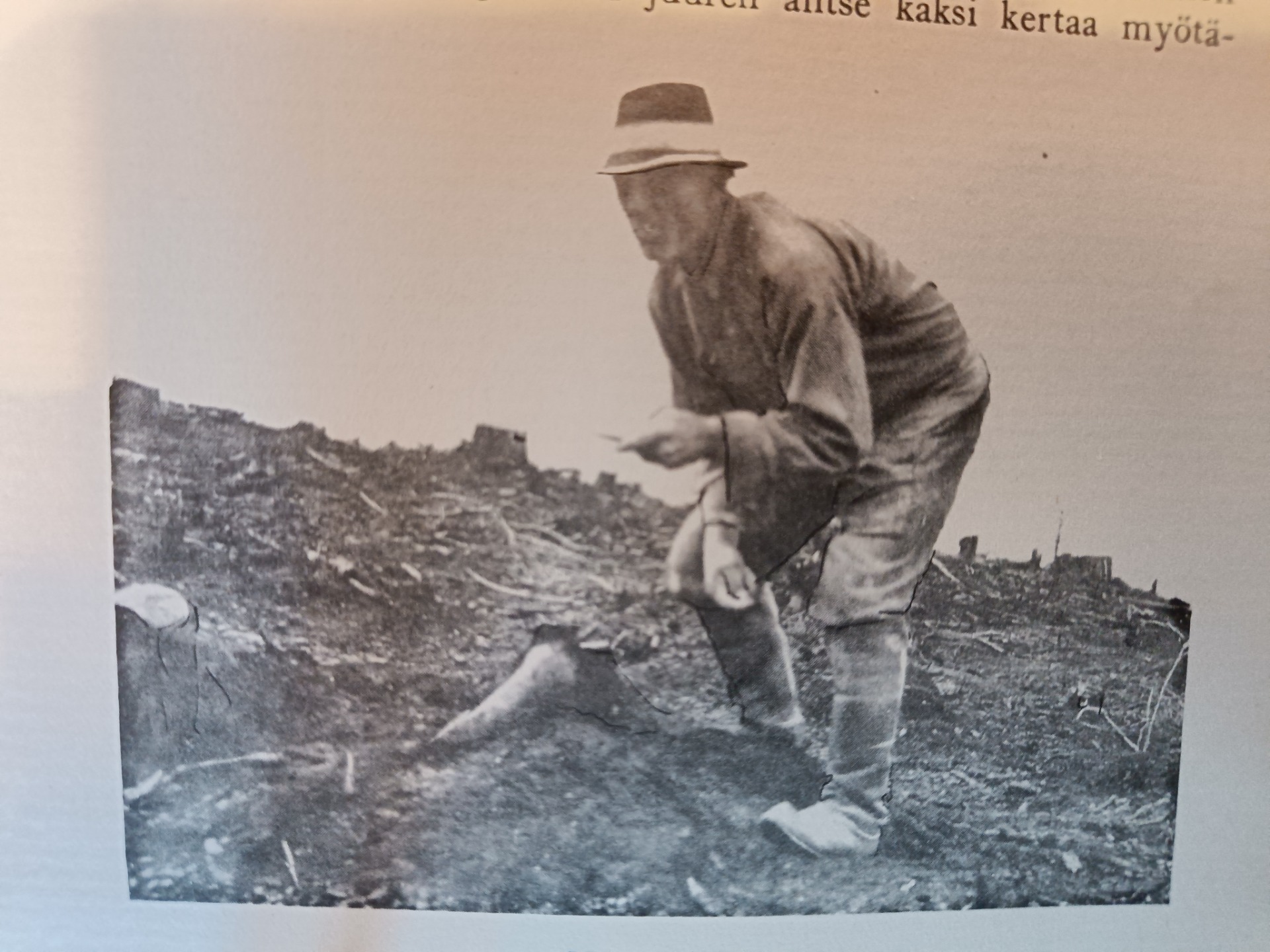
Between the flax and the turnip, barley was sown in the burned field, with root crops among it. The sowing took place during the week before Midsummer, and the hoeing was finished precisely on Midsummer’s Eve.
As is remembered, the summer of 1928 was rainy. For weeks on end the sky was covered with heavy, clay-colored clouds, thick with water. It was therefore no wonder that some of Savola’s slash-and-burn clearings were left unburned. In the language of the slash-and-burn farmer, a clearing that is not burned in time is said to remain “rasi”. A proverb, which usually refers to an old bachelor finally getting married, says: “The time will come when the rasi will burn.” But it was literally true as well. When a year had passed and once again the dry and windy early days of June arrived, the blue smoke of the clearing drifted over the same forest opening where the showers of the previous summer had extinguished the flames. And Aaro sowed, the farmhands ploughed, and the women nodded as they hoed.
Slash-and-burn cultivation has changed a great deal from what it once was. In the old days, the swiddens were also rolled with “sinoja”. Logs five axe-handles long were dragged to the burn site to “cross racks” to dry, and at burning time they were arranged as “siena rows” on top of rollers. The hooked-horned rolling tool, with which the burning “sienas” were pushed along, no longer exists either.
Many magical beliefs were once associated with slash-and-burn cultivation. Wise folk knew how, with their tricks, to prevent the fire from spreading into forbidden areas. The blaze was made to burn well when, before lighting the swidden, one was threaded under the root twice clockwise and once counterclockwise, while reciting the following incantatory words:
Took fire from the birch-bark vessel,
bright flame from the little box,
set the fire to flicker,
let the bright flame spread,
with three full blazes.
Here and there in the remote backwoods of Northern Savo, it is still possible to find earth-scratchers who burn their swiddens, sow, plough them and harvest the crop while observing rites whose complexity and the esteem they enjoy need not be ashamed when compared with the finest customs of the academically educated world.